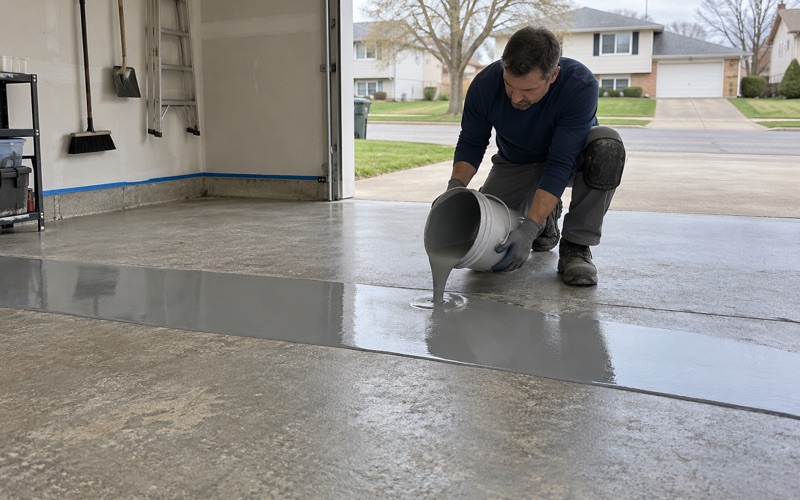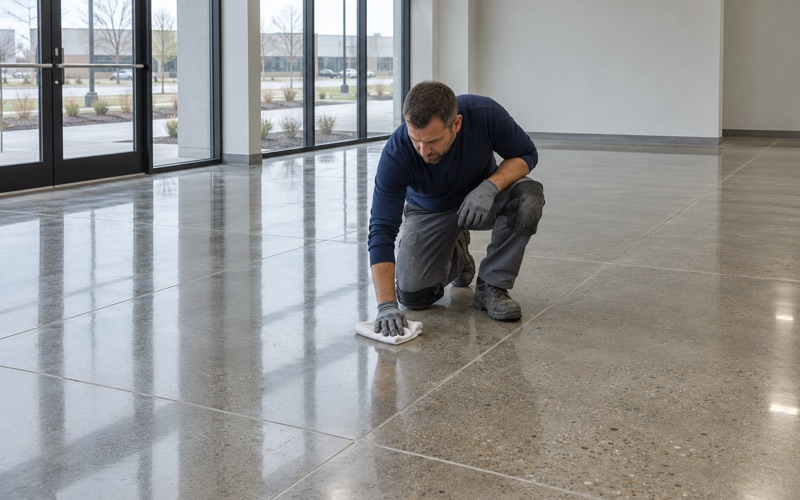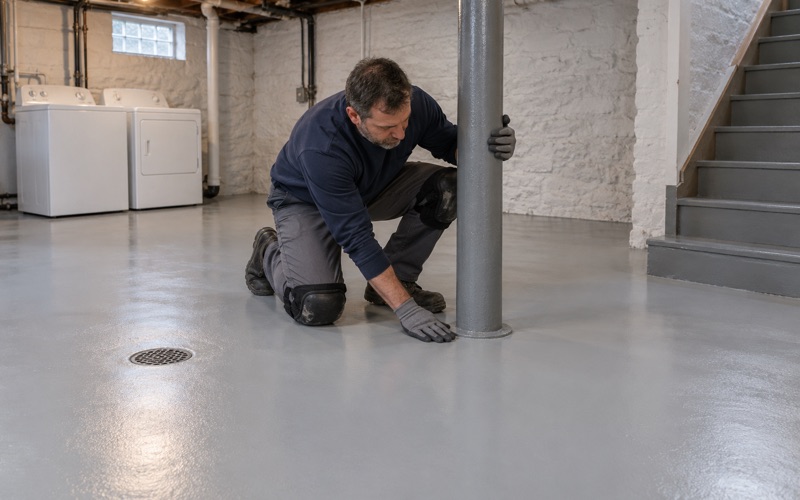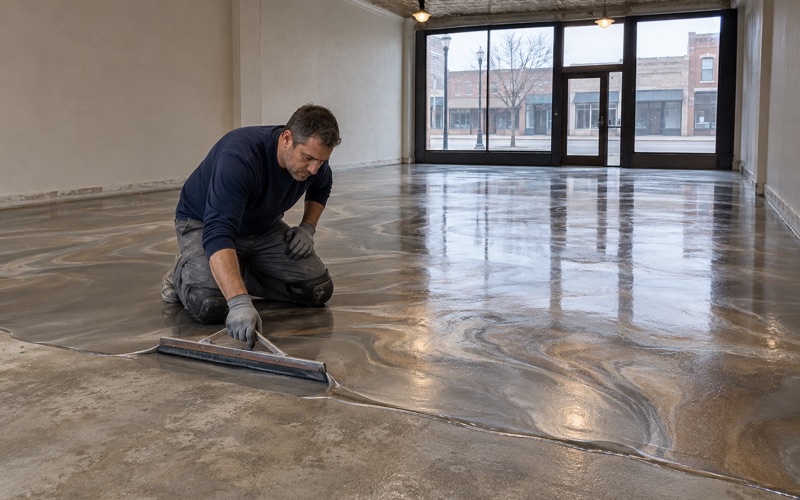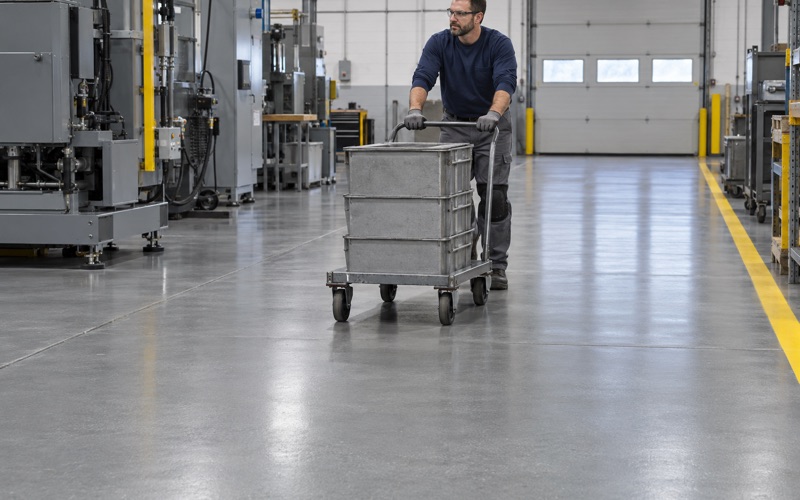
Kenosha Epoxy Flooring has spent more than 20 years putting down epoxy flooring in Zion and across the state line, and the question we ask first on an industrial job is simple: what gets spilled here? A floor that shrugs off one chemical can soften, stain or lift under another, so we start with the list of products a building handles rather than with a color chart.
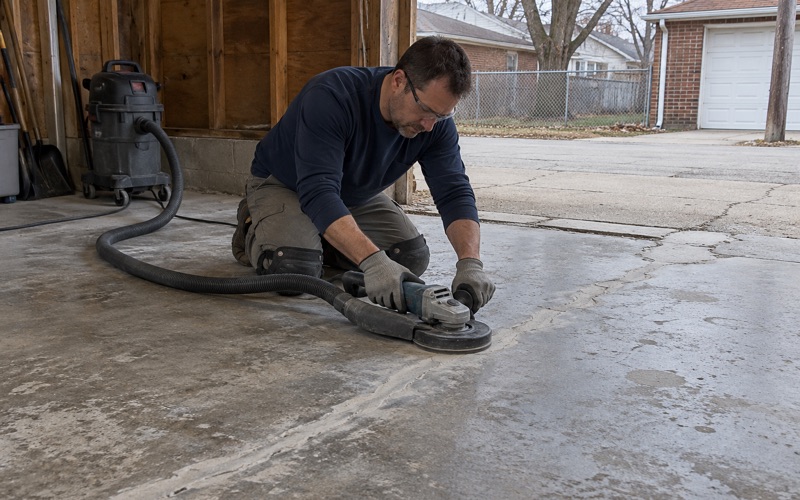
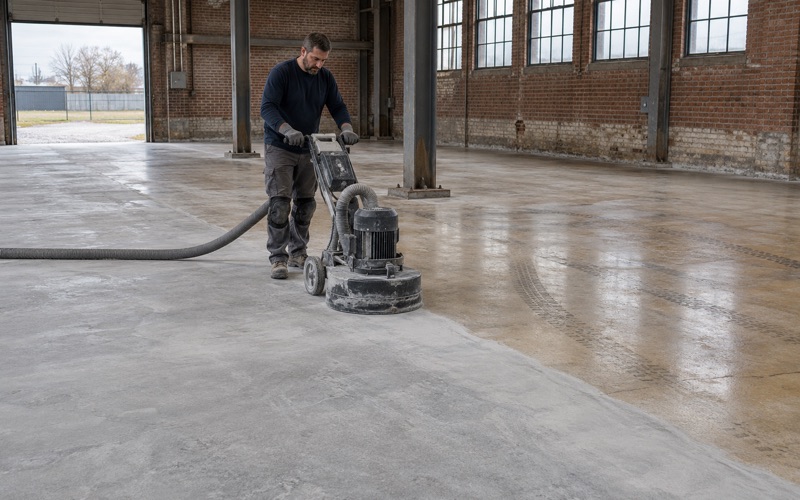
That list drives the resin choice, the build thickness and the topcoat. It also shapes how the floor is opened before anything is applied. We grind or shot blast every slab to a measured profile and never acid etch, because a bond that depends on leftover acid in the pores is a weak start for a floor that will see acid on purpose.
The same habit carries into smaller rooms. A machine shop, a parts-washing corner or a home garage that sees degreasers and wheel cleaners deserves a floor matched to those products, not a one-size coating sold on a promise. Our proposals name the product, the system and the finished thickness so the choice can be checked later.
A Pretreatment Chemical Maker on Industrial Avenue
What Coral Chemical Company makes
Coral Chemical Company lists its headquarters at 1915 Industrial Avenue, an address that geocodes inside Zion city limits in Zion Township, Lake County. The company describes itself as a family-owned North American formulator and manufacturer of industrial chemical products, active for more than 50 years and running three facilities in the United States.
Its line centers on metal pretreatment: the cleaning stages, conversion coatings and final rinses that prepare metal and plastic parts before paint or powder goes on. That includes zinc and iron phosphate systems and a non-phosphate pretreatment sold as Eco-Treat. We have not seen Coral’s own floors, and nothing here describes them. What the product line shows is the kind of chemistry a Zion floor can meet.
Alkaline cleaners on one end, a pH 3.5 bath on the other
Pretreatment runs in a sequence. Alkaline cleaners strip oil and shop soil from metal first, and they sit high on the pH scale. Phosphate stages and acidic conversion treatments follow, and Eco-Treat is listed as operating at a pH around 3.5, which is plainly on the acid side.
So a single pretreatment line spans both ends of the scale within a few feet. Rinse water carries a little of each stage forward, and drips from racks and parts land wherever the line runs. A floor in that path is not facing one chemical. It is facing a cleaner, a rinse and an acidic bath in turn, often on the same shift.
Why a plant that blends both sides matters for the floor
A formulator that blends and packs products from both ends of the pH scale can spill acid and caustic on the same floor. A drum valve leaks, a tote is overfilled, or a hose is uncoupled with product still in it, and the floor beneath has to tolerate whichever product came out.
That changes how a floor system is chosen. Picking a resin because it handles the caustic cleaner says nothing about how it handles the acidic bath, and the reverse is just as true. The system has to be checked against both product families, and the spill plan has to be written product by product.
Looking for epoxy-flooring closer to Beach Park? See Epoxy-Flooring Services in Beach Park.
Why One Floor Resin Is Not Right for Every Spill
Acids and caustics attack in different ways
No single resin resists every chemical, and any claim otherwise should end the conversation. Standard epoxies generally hold up well against many alkaline solutions, while stronger or more concentrated acids can etch, discolor or soften them over time. Some acids that seem mild at room temperature become harsh when warm or left to sit.
The resin family is only part of the answer. Hardener chemistry, film thickness, cure time before first exposure and how long a spill stays wet all change the result. Two floors called epoxy can perform very differently once a puddle of the same product has been sitting on each for an afternoon.
Body coat and topcoat do different jobs
On a chemical floor we think of the system in layers. A 100% solids epoxy body coat, sometimes with a quartz aggregate broadcast, gives thickness and impact strength. The topcoat is what the spill touches first, so its chemistry has to match the products on the list, not just look good.
Where a building needs more than an epoxy can give, urethane cement is one of the systems we consider, since it tends to tolerate heat and a wide chemical range. We say which build we are proposing and why, and we do not stretch a garage-grade topcoat into a process area.
Spill response planned product by product
A floor rated for a chemical over a set exposure time is only protected if the spill is cleaned up within that time. So we ask how each product is handled when it lands on the floor, who responds and how quickly, and what is used to neutralize or absorb it.
Cleaning a caustic spill with an acidic cleaner, or the reverse, can put two attacks on one patch of floor. Writing the response down by product, next to the floor’s ratings, gives the people working the line a plain instruction. It also gives the owner a fair way to judge the floor if a stain ever appears.
Reading a Chemical-Resistance Chart Against a Product List
Start with the building’s own list
Every resin maker publishes a chemical-resistance chart for each system, listing chemicals down one side and a rating for each. We read that chart against the building’s actual product list, one line at a time, rather than against a generic phrase such as good acid resistance.
That means getting real product names and, where possible, their concentrations and working temperatures. An alkaline cleaner at full strength and the same cleaner diluted in a wash stage are different exposures. When a product is not on the chart, we ask the resin maker directly instead of guessing from a similar name.
Exposure time and what the ratings mean
Charts usually rate a chemical by how long the coating tolerates it, often split into splash, short-term and long-term contact. A floor can be fine with a quick splash of a product that would damage it if left overnight under a leaking drum.
We match those columns to how each product is actually handled. A packing line with dependable cleanup may only need splash ratings, while an area under storage racks where a slow leak can sit unnoticed needs a longer rating. Where no system on the chart covers a product well, we say so plainly.
The proposal makes the choice checkable
Our proposals name the product, the system build and the finished thickness, so the chart we used can be laid beside what went down. If a supervisor later asks whether the floor was meant to handle a certain cleaner, the answer is on paper rather than in someone’s memory.
We also read warranty exclusions aloud before a job is sold, with moisture named first and chemical exposures beyond the chart named with it. An owner should know which products the floor was built for and which ones were never covered.
Shop and Garage Floors That See Cleaners and Acids in Zion
Smaller shops on and around Industrial Avenue
Not every floor that meets these chemicals sits in a formulator’s plant. Fabrication and finishing shops wash parts with alkaline cleaners, and some run small phosphate or conversion stages before paint. The Zion Park District’s 2025 financial report also notes new businesses opening in the city, and every new tenant brings its own product list.
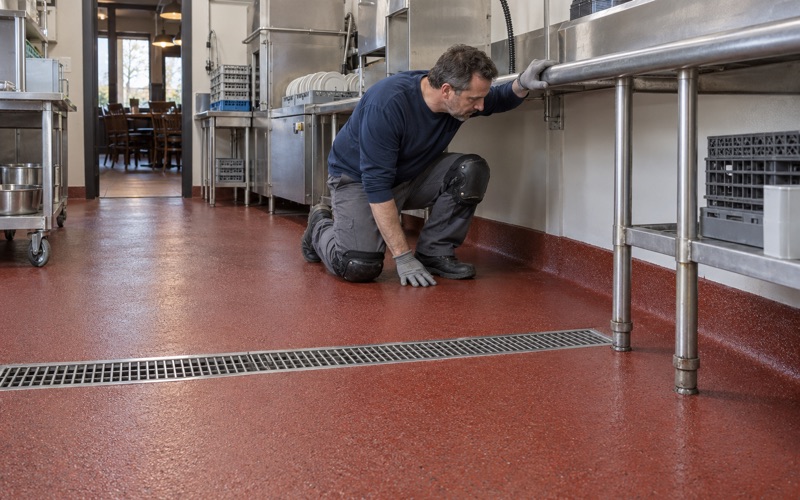
In a busy shop we plan the work around the hours the building has to keep running, including overnight and weekend windows. Saw-cut and construction joints get a semirigid joint filler before coating so forklift and cart wheels do not break the edges, and the floor drain and sump details are built to carry rinse water away from the coating edges.
Home garages see cleaners too
A Zion garage will not see a pH 3.5 bath, but it does see wheel cleaners, degreasers, brake fluid and winter road salt and calcium chloride brine off the tires. The same chart logic applies on a smaller scale: we check the topcoat against what the owner actually uses on cars and tools.
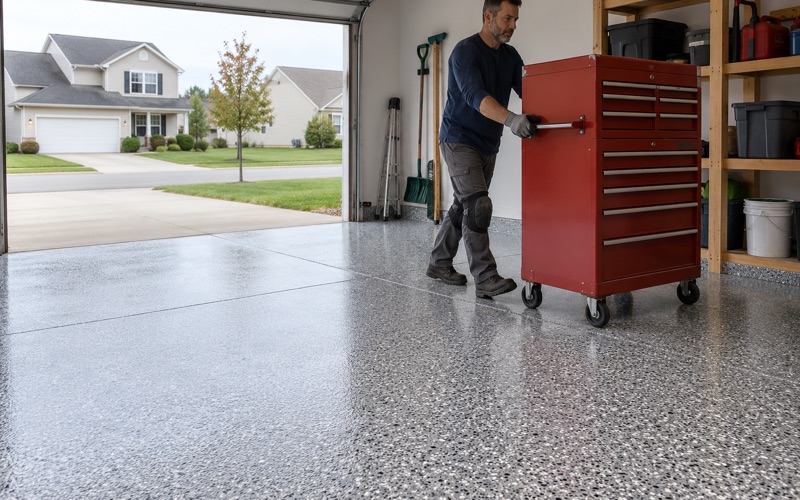
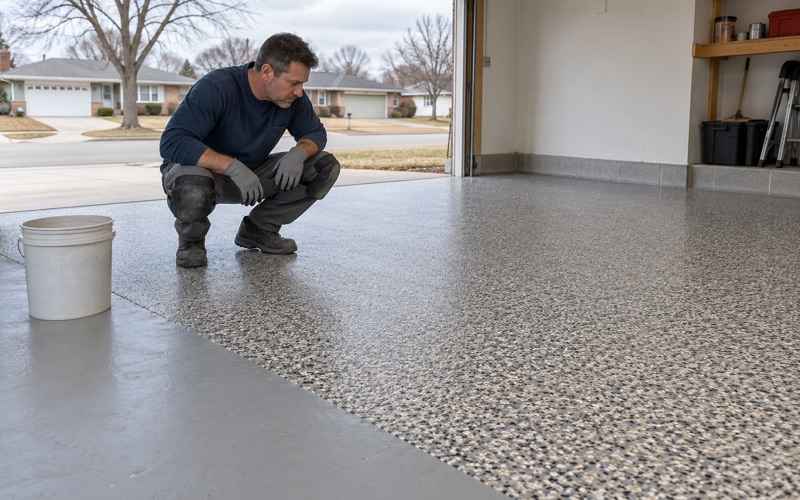
Polyaspartic and polyurea topcoats over a vinyl flake broadcast are common in garages, and we also guard against hot tire pickup with a full-thickness build. The report noted 20 new homes completed in the Shepherd’s Crossing neighborhood, and a new garage slab gets the same moisture testing as an old one.
Moisture, curing and the Illinois coating rule
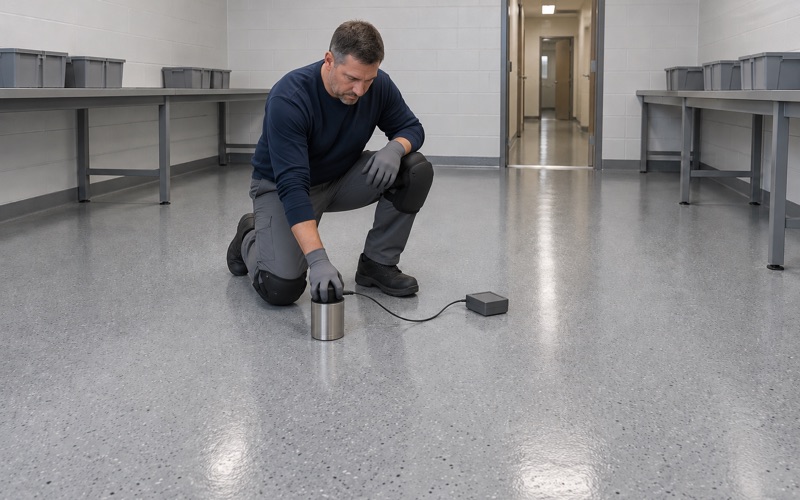
Moisture testing is a line item in every scope, using ASTM F1869 calcium chloride tests or ASTM F2170 relative humidity probes, because a chemical-rated coating still fails if vapor pushes it off the slab. We read cracks, joints and old coatings first and say when a slab needs repair before it can be coated.
Curing is scheduled against slab temperature and the dew point spread at the surface, not the calendar. Zion sits on the Illinois side of the line, where 35 Ill. Adm. Code Part 223 limits the VOC content of the coatings an installer may apply, and we select products that fit it. Grinding dust and slurry are collected on site and never washed toward a drain.
- 20+ Years on Concrete
- Moisture Tested First
- Written System Proposals