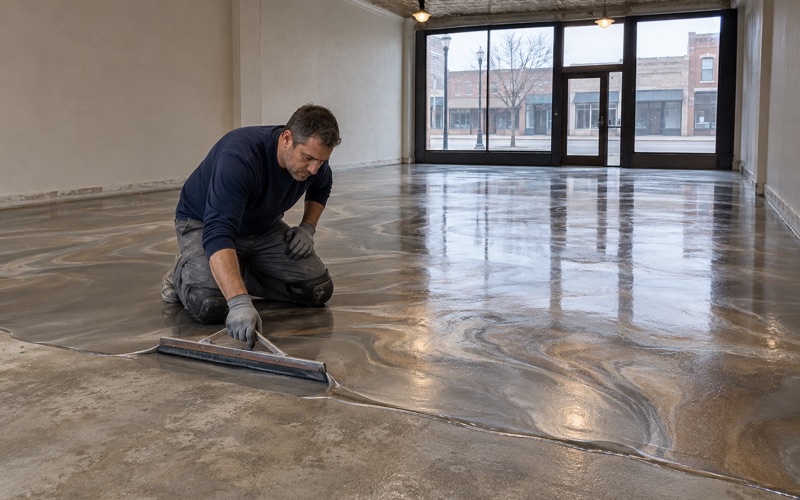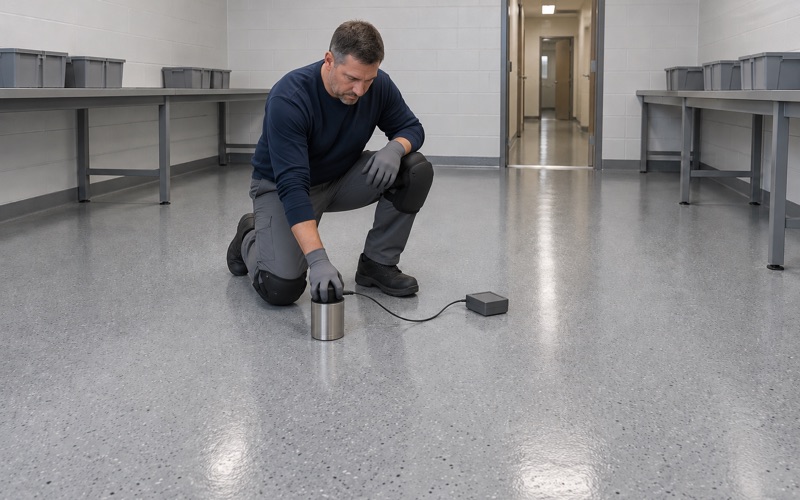
Kenosha Epoxy Flooring has spent more than 20 years installing epoxy flooring in Winthrop Harbor and across the state line, and the garage floors we coat here have a job most floors never face. They take the mess of a day on the water: fish slime, blood and oil dripped from coolers and cutting boards onto bare concrete. Our work is building a floor that keeps that residue on top, where it can be washed away.
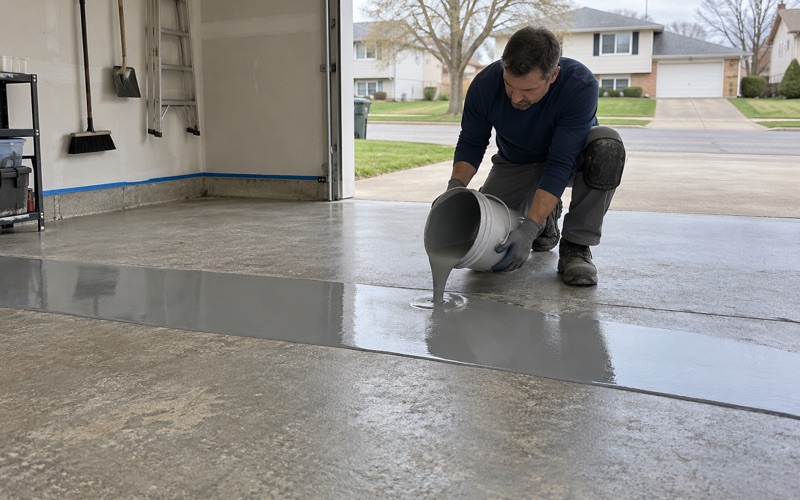
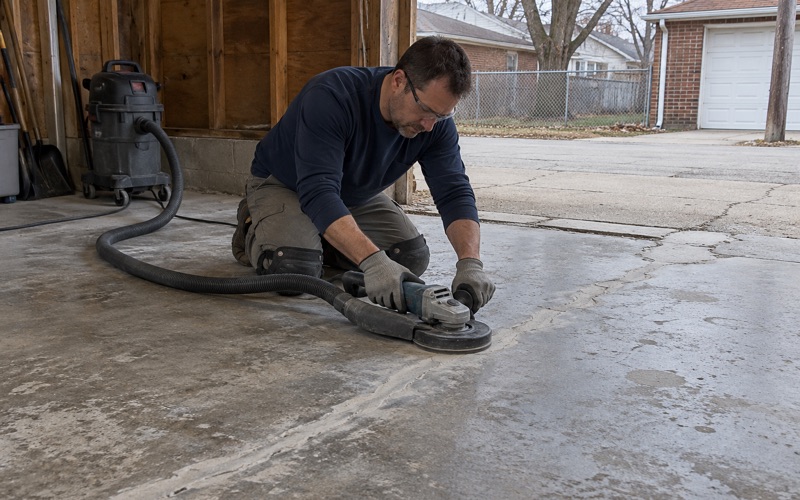
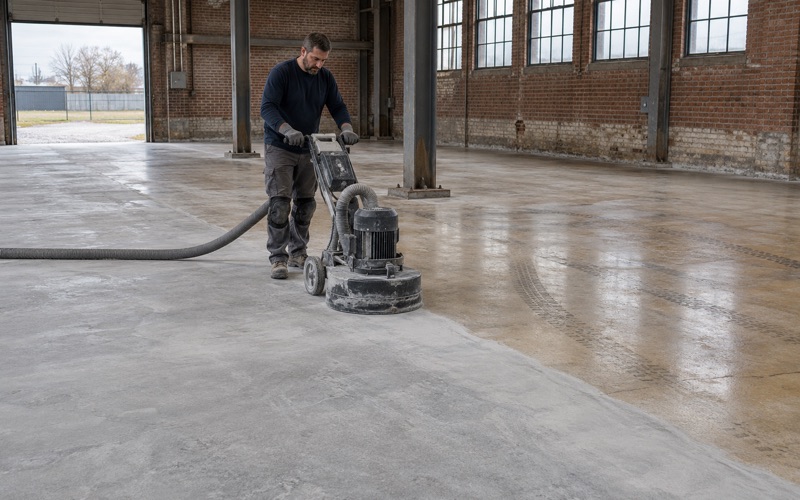
Every job starts the same way. We open the slab mechanically with a diamond grinder or shot blaster, never with acid, so the coating bonds into sound concrete rather than sitting on a weak skin. The proposal names the product, the system build and the finished thickness, so you can check what went down against what was quoted.
What a sealed floor will not do matters just as much. A coating does not pull out odor that has already soaked into a slab. It keeps new residue from following the old down, and we say that before a deposit changes hands, not after.
Forty Charters, a Cleaning Station and the Catch That Comes Home
Winthrop Harbor sits on the northern border of Illinois, and it is known for North Point Marina, a 1,500-slip state marina built in 1989 that the village’s economic development site credits with about 800,000 visitors a year. The same listing counts 40 fishing charters working out of the harbor.
Salmon and lake trout from April to late October
Charter boats based at 701 North Point Drive list coho salmon, king salmon and lake trout among their catches, and one runs salmon trips from April 15 through late October. That is a long season, stretching from spring into fall, and every trip that ends with fish in a cooler ends with those fish being cleaned somewhere.
Salmon and lake trout are oily fish. Their slime and blood carry fats that cling to whatever surface they land on, which is why the cleanup question matters far more for an angler than for a household that only parks cars on its garage slab.
The cleaning station, and the fish that skip it
Travel coverage of the marina from October 2025 describes a fish-cleaning station alongside the fishing pier, so catch can be filleted before it ever leaves the harbor. Not all of it is. Some anglers want to bleed, portion and bag fish on their own schedule, with their own knives and their own freezer a few steps away.
We have no count of how many people in the village clean fish at home, and we will not pretend to. What we do know is what happens when they do it on bare concrete, and that is the problem a coated floor is built to solve.
Owner-occupied houses, owner-made decisions
Census figures put 2,482 of the village’s 2,500 owner-occupied homes in detached houses. In practice the garage where a catch gets cleaned almost always belongs to the household doing the cleaning, and the floor decision is theirs to make.
That matters for how we quote. A homeowner planning to clean fish on the floor for years is buying a system, not a weekend coat, and we price and build it that way.
Looking for epoxy-flooring closer to Mount Pleasant? See Mount Pleasant Epoxy-Flooring.
Why Fish Oil and Blood Stay in Bare Concrete
Bare concrete looks solid, but it is porous. It absorbs oils and other liquids, and anything that carries odor can soak below the surface where a brush and a bucket never reach.
What happens on an open slab
Fish slime is sticky and protein-heavy, blood spreads thin and fast, and the oil from a salmon fillet behaves the way any oil does on raw concrete: it wicks in. A cleaning session that ends with a rinse leaves a floor that looks clean and still holds what went into it.
The smell shows up later, often on a warm afternoon with the door shut. That is residue below the surface working its way back out, which is why scrubbing the same patch again and again tends to change so little.
Why scrubbing stops short
Surface scrubbing reaches the surface and not much else. Degreasers and enzyme cleaners are sold to break down organic oils on concrete, and they can help, but on an open slab they are chasing material that has already moved below where they work.
Pressure washing has the same limit and adds a new one. Driving water into a porous slab can carry fresh residue in with it, and the rinse water has to go somewhere, which on a garage floor usually means out the door toward the driveway.
What a coating can and cannot fix
A sealed floor changes where new residue goes. Fish oil and blood that land on a non-porous film stay on top of it, so a hose and an enzyme cleaner can take them off before they have anywhere to hide.
It does not erase what a slab already holds. Grinding removes the top of the concrete and some of what is in it, and we tell you plainly whether a heavily soaked floor is a good candidate before we quote, because a coating over a contaminated slab is a coating that may not stay bonded.
Cracks matter the same way. We read the cracks, joints and any old coating first and say plainly when a slab needs repair before it can be coated, and we are clear that a coating is a film that follows the concrete under it rather than something that stops it moving.
A Floor That Hoses Off: Prep, Texture, Coves and a Drain Path
A floor meant to be hosed down after cleaning fish is built differently from one that only has to look good under a parked car. The bond, the surface texture, the edges and the way water leaves the room all get decided before any product is opened.
Grinding, moisture testing and the bond
We grind or shot blast to an ICRI concrete surface profile suited to the system, which also takes off the weakest, most contaminated top layer. On a slab that has taken fish oil, that mechanical pass matters twice, because acid etching would not lift the oil at all.
Moisture testing comes next, and it is in the written scope rather than sold after a failure. We use methods such as ASTM F2170 in-situ relative humidity probes or an ASTM F1869 calcium chloride test, because a garage slab that looks dry can still push enough vapor to lift a coating.
Texture that grips wet boots but still rinses clean
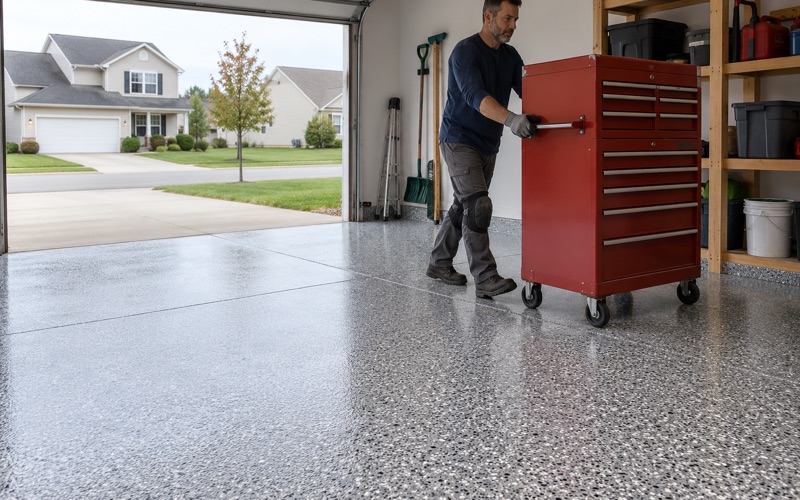
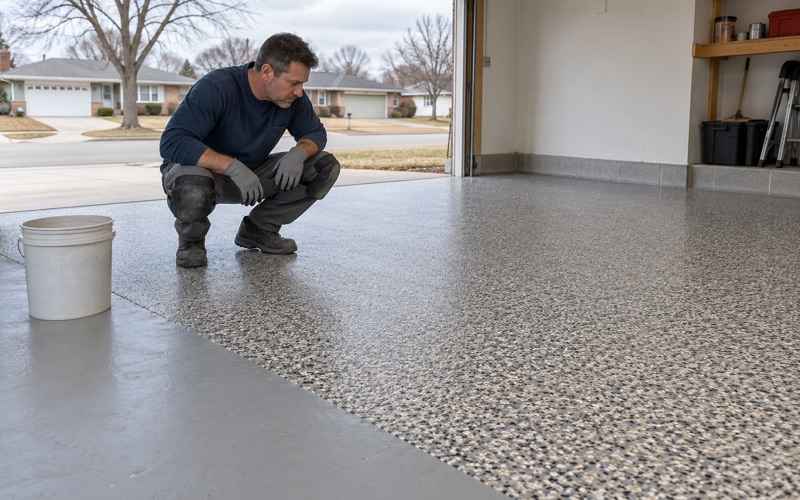
A glass-smooth epoxy is slick under wet rubber boots, and a floor that will see slime and water needs some grip. We usually broadcast vinyl flake or quartz aggregate into the base coat, then lock it in with a polyaspartic or polyurea topcoat, adjusting how much texture stays exposed.
The tradeoff is real. More texture means better footing and slightly more work with a deck brush; less texture rinses faster. We set that balance with you around where the cleaning table actually stands, rather than applying one finish wall to wall by default.
Coved edges and where the rinse water goes
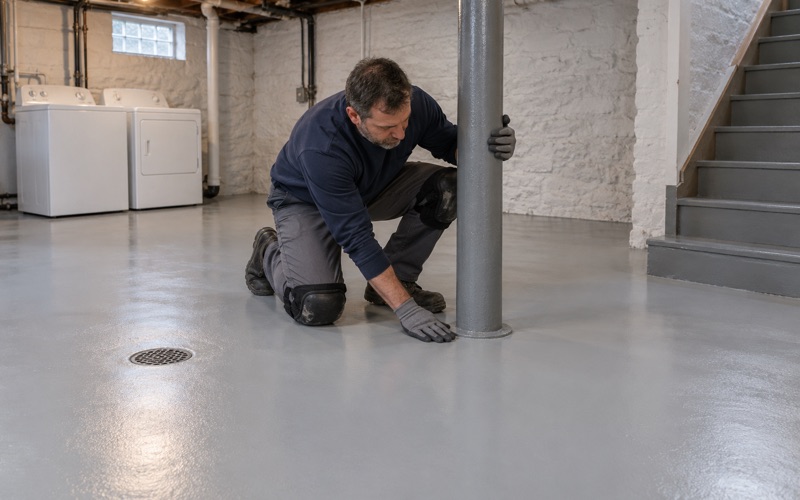
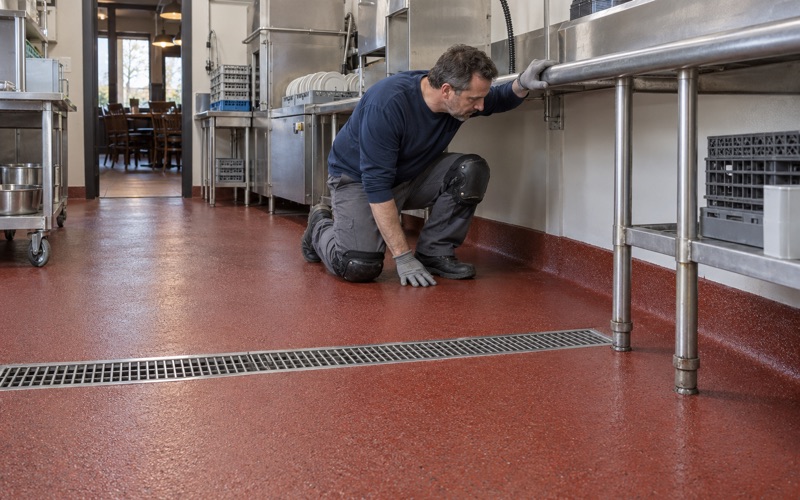
The joint between slab and wall is where blood and slime collect, out of reach of the hose. A short coved base carried up the wall closes that corner, so the coating runs in one piece from floor to wall and nothing tucks under a baseboard or a stud plate.
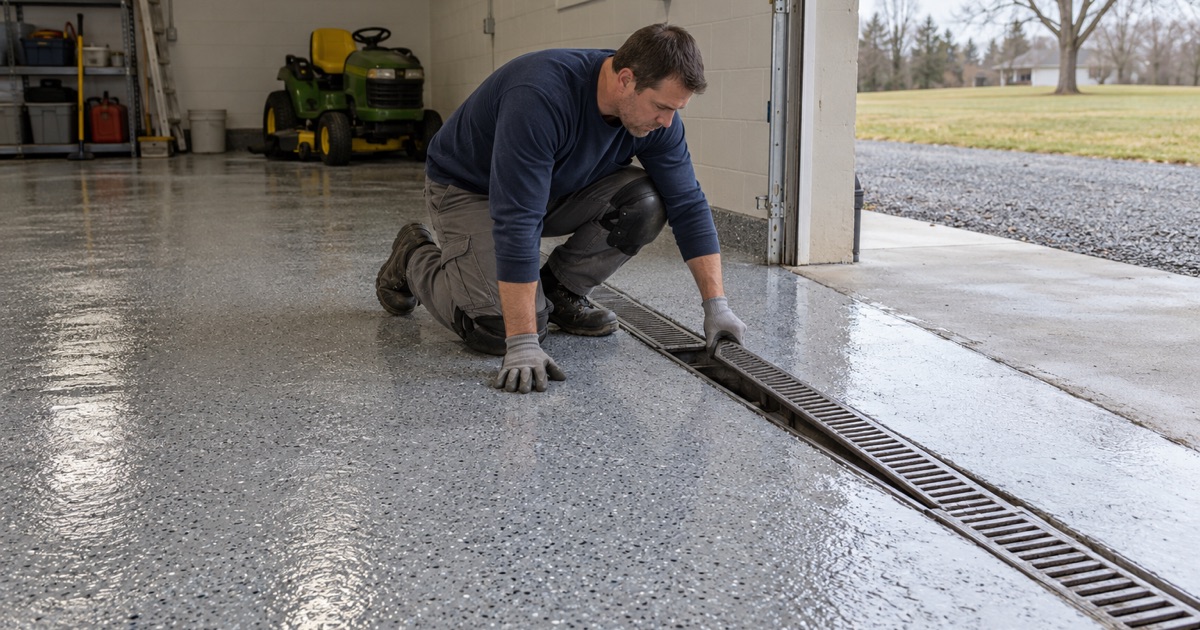
Rinse water needs a path out. We look at how the slab already slopes, whether there is a floor drain, and where the door apron sends the water, and we detail cracks and joints so they do not trap residue. Grinding dust and slurry from our own work are collected on site and never washed toward a street drain or the lake.
Freezers, Coolers, Tackle and the Paperwork Behind the Job
An angler’s garage often holds more than a car. A chest freezer, a stack of coolers, rod racks and a cleaning table can all sit on the floor, and each one shapes how the coating is laid out and how long the room is out of use.
Working around the freezer and the gear
Everything comes off the floor before grinding starts, and the freezer is usually the item that needs a plan. We schedule so it is unplugged for as short a window as the system allows, and we talk through where it goes back so its feet land on a fully cured surface.
Coolers dragged across a floor and tackle dropped on it are hard on a thin film. If a car still parks there, hot tire pickup is a known failure of thin one-coat kits, which is why we build on a 100% solids epoxy base rather than a single thin coat.
Curing on the slab’s schedule
We schedule curing against slab temperature and the dew point spread at the slab surface, not the calendar. An unheated garage in the cold months may have to wait for spring, and we say so at the quote rather than coating a slab that is too cold to cure properly.
For an angler, timing is worth planning. A floor coated while the slab is still warm enough to cure can be back in use before the next fish box comes through the door, rather than leaving you mid-season with nowhere to clean the catch.
Illinois rules, village rules and the contract
Winthrop Harbor is on the Illinois side of the line, so the coatings we apply here have to meet the VOC limits in 35 Ill. Adm. Code Part 223, a matter Wisconsin leaves to the federal rule. Illinois licenses no flooring or coatings contractor, so we hold no such license and claim none.
Before scheduling, we call the Village of Winthrop Harbor at its village hall, 830 Sheridan Road, to ask whether the job needs a permit or contractor registration. Every home job also gets a written contract before any deposit, naming the products and the warranty, with exclusions read out first and moisture named at the top of that list.
- 20+ Years on Concrete
- Moisture Tested First
- Written System Proposals