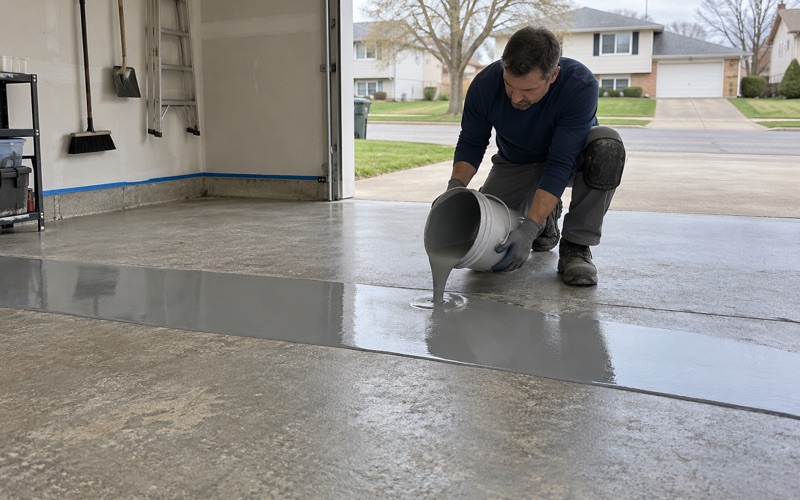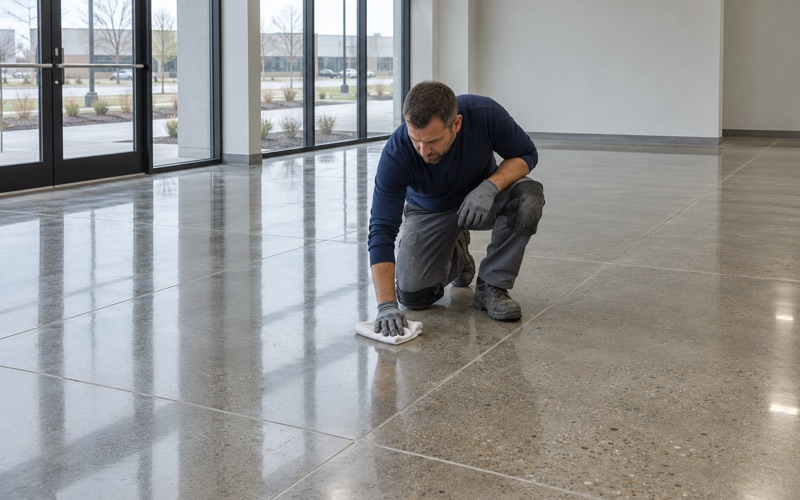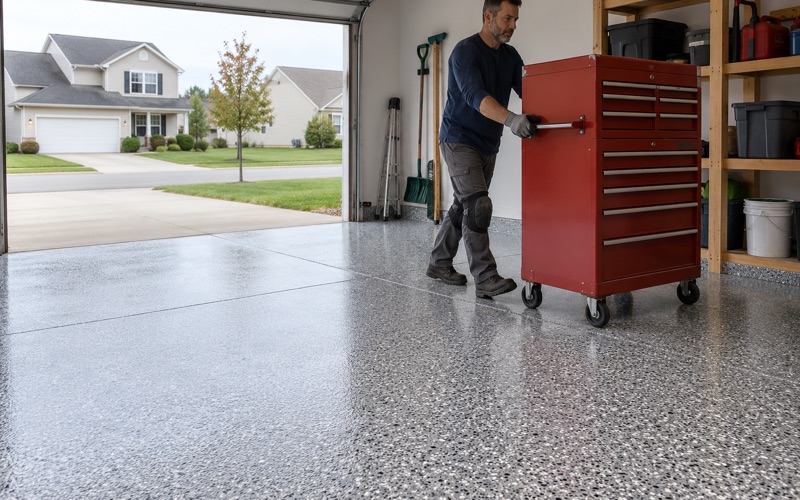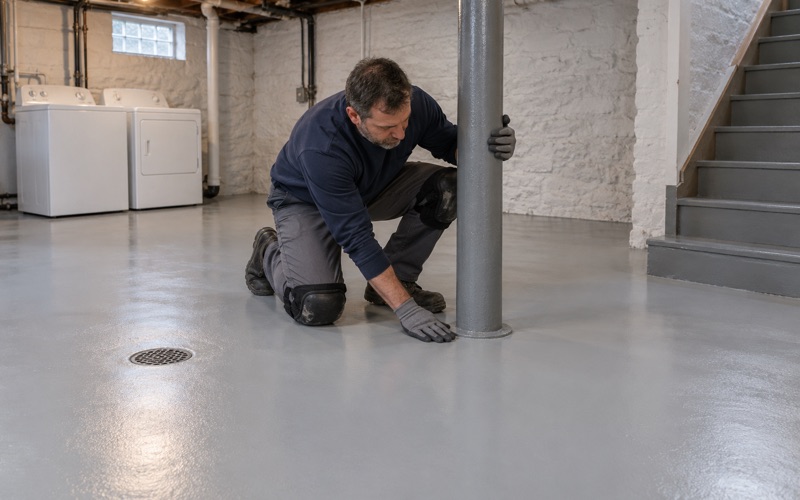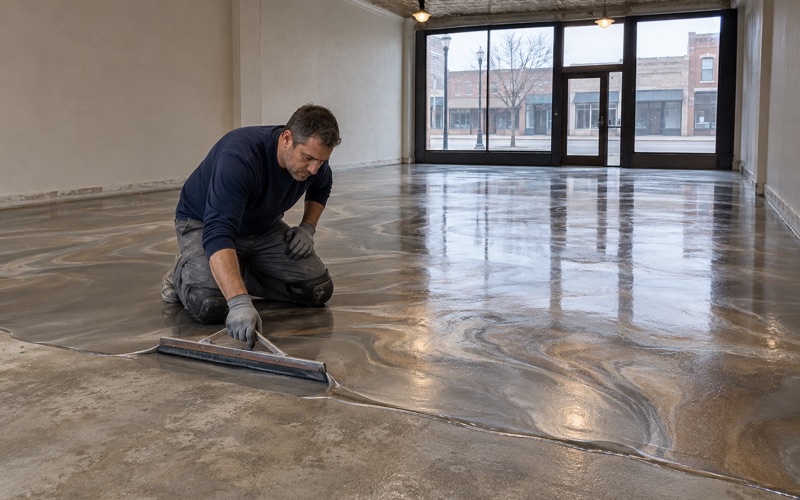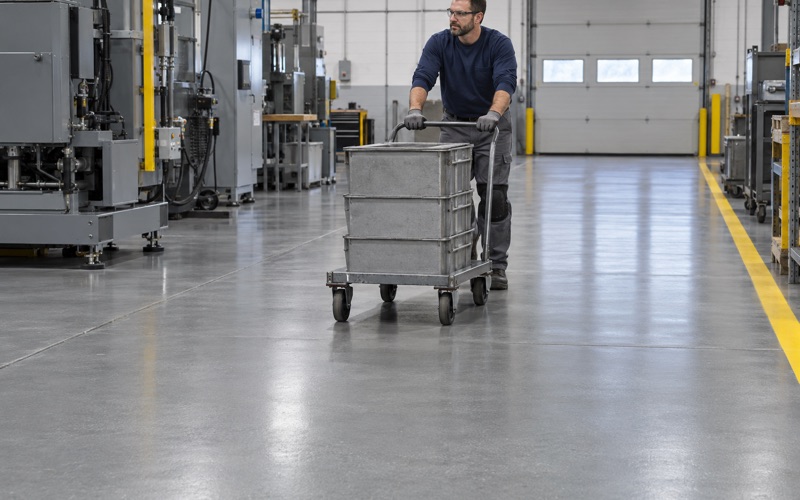
Kenosha Epoxy Flooring brings more than 20 years of slab preparation and coating work to epoxy-flooring in Union Grove, and every job starts with one question: what will this floor actually be put through? A garage, a shop and a production room each load a slab differently. The right system follows from that answer rather than from a catalog page.
Before we quote, we walk the floor and read its cracks, joints and any old coating, and we say plainly when the concrete needs repair or replacement first. Moisture testing is written into the scope as its own line, not offered after a floor has blistered. The proposal then names the product, the system build and the finished thickness, so you can check what went down against what was quoted.
Heat is the exposure most owners underestimate. A floor that stays cool all day and then takes near-boiling water in a sudden flood moves in ways a typical garage slab never does, and a coating chosen without that in mind can crack along its bond line. The sections below cover that case first, then the quieter floors, the village permit question and residential garages.
A Brewery on Main Street and the Heat Its Floor Takes
Tailwinds Brewing at 1035 Main Street
Union Grove, a Racine County village of 4,806 people at the 2020 census, now has its own brewery. Tailwinds Brewing Company at 1035 Main Street soft-opened on October 30, 2025, with its own brewing equipment brought into the village. That makes it a working brewhouse, and a brewhouse floor is one of the hardest exposures a slab can face.
We have not worked on that building and do not know what is on its floor today. We use it here because it shows what a brew deck asks of concrete. The same physics applies to any small production space in the village that runs hot water across a slab.
Hot Wort and Hot Clean-in-Place Cycles
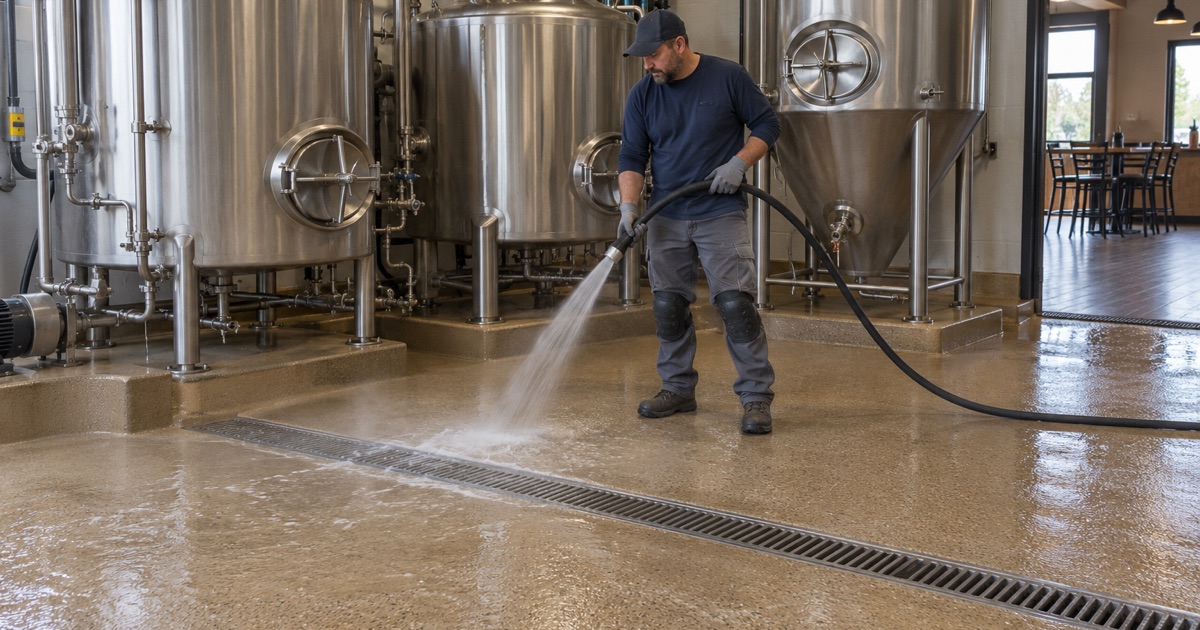
Brewing moves liquid at temperatures well above anything a household floor sees. Brewery sources name hot wort above 180 degrees and hot clean-in-place (CIP) cycles as the main thermal-shock risk on a brew deck. Spills, boiling-water rinses and hose-downs land on the floor during every batch.
Between those events the slab goes back to being cool, since concrete holds the temperature of the ground and the room around it. One vendor example describes a 35-degree floor hit with 185-degree water. That swing, repeated over many brew days, decides whether a floor surface holds or starts to come apart.
What Thermal Shock Does to a Coated Slab
Thermal shock is the stress of a fast temperature change. The hot top surface tries to expand while the cold concrete beneath it stays put, and the bond line between coating and slab takes the strain. If the coating expands at a very different rate from the concrete, that stress concentrates at the bond every time the water hits.
Over repeated cycles the strain shows up as hairline cracks, then as edges lifting near drains and around equipment pads. Once water gets under a lifted edge, each hot washdown pushes it further. The damage usually starts where heat and water meet most often, which on a brew deck means around the kettle, the drain line and the hose stations.
Looking for epoxy-flooring closer to Antioch? See Epoxy-Flooring Services in Antioch.
Why Brewhouse Floors Go to Urethane Cement
Expansion Mismatch Between Epoxy and Concrete
Trade press on food and beverage floors says the thermal expansion of epoxies differs too widely from that of concrete, and that the mismatch is why epoxy floors crack under hot-water washdown thermal shock. That is a general statement about the chemistry, not a fixed failure point for every epoxy on the market. Products vary, and we do not quote a temperature at which all epoxy gives up.
In practice, a standard epoxy floor is the wrong default for a brew deck. Epoxy remains a strong choice for many other rooms, including taprooms, storage areas and garages. The hot side of a brewhouse calls for a material built to move with the slab under it.
What the Urethane Cement Ratings Say
Urethane cement is a cementitious urethane system made for wet, hot process floors. Manufacturer literature rates these floors for service temperatures up to about 220 or 250 degrees, depending on the product, with thermal shock resistance for hot and cold wash areas. Those figures are manufacturer claims, not independent test results.
So we read each product data sheet’s thermal-shock rating against the actual exposure before we propose a system. If the brew deck sees hot CIP returns and boiling water, the rating has to cover that load, not just occasional spills. The product, build and finished thickness we settle on all go into the written proposal.
Preparing a Slab for a Hot Process Floor
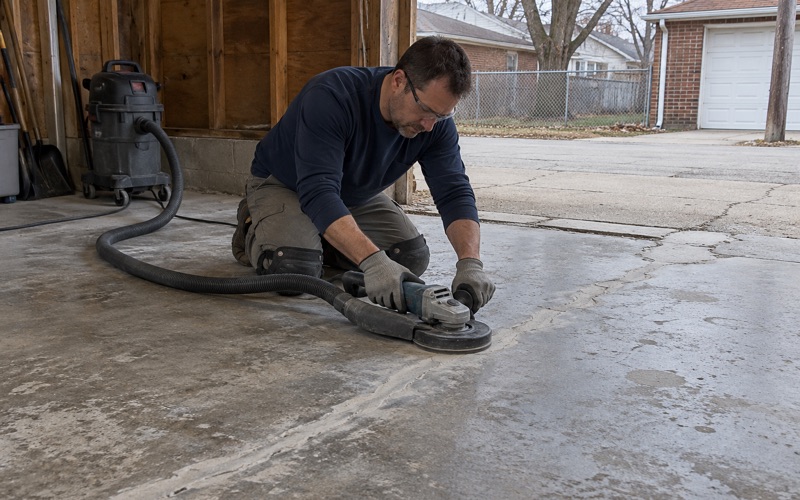
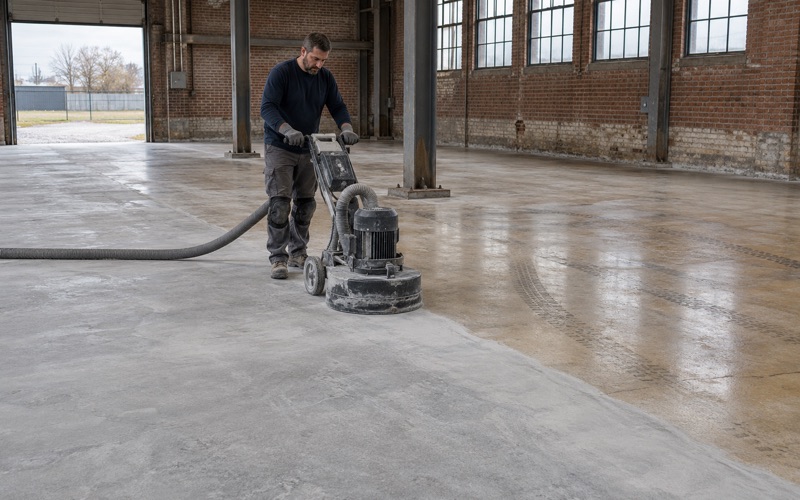
Urethane cement is only as good as the concrete it bonds to. We open every slab mechanically with a diamond grinder or shot blaster to the surface profile the product calls for, and we never acid etch. Grinding dust and slurry are collected on site and kept away from the street drain.
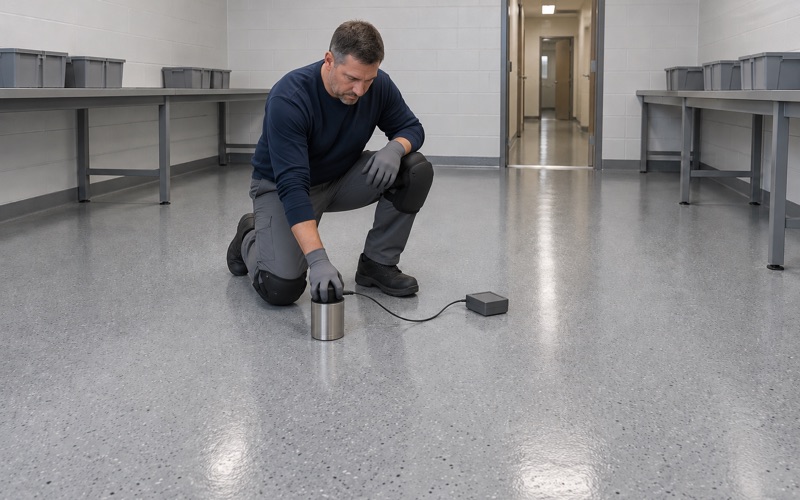
Moisture testing comes before any material goes down, because process floors often sit on older slabs with no record of what is under them. Joints, cracks and drain edges are detailed in the scope, since that is where a hot process floor gets tested first. Production spaces are scheduled around the hours they must keep running, including overnight and weekend windows.
Taproom and Cold-Side Floors Are a Different Job
Where Customers Stand
A taproom does not see hot wort or CIP returns. It sees foot traffic, spilled beer, chair legs and mopping, a much gentler load than the brew deck next door. That opens the door to decorative systems, such as a vinyl flake broadcast or a quartz aggregate broadcast under a clear topcoat.
A taproom floor still has to clean easily and stay manageable when wet, so the broadcast and the topcoat are chosen together. Polyaspartic and polyurea topcoats are common on this kind of floor. We match the texture to how the room is cleaned, since a deeper profile grips better but holds more grime.
Coolers and Keg Storage
Cold-side spaces, such as walk-in coolers and keg storage, carry their own exposure. They stay cold, take cold rinse water and carry rolling loads from kegs and carts. The thermal swing that defines the brew deck is mostly missing, so the decision turns on abrasion, impact and wet cleaning instead.
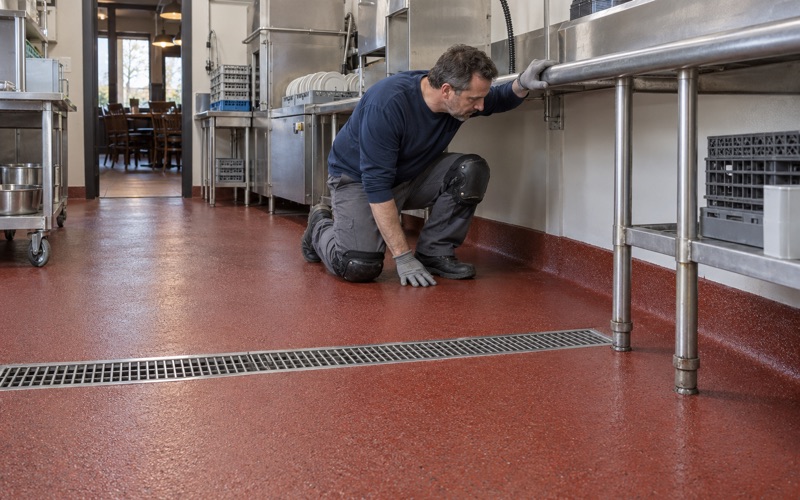
In those rooms, a 100% solids epoxy or a urethane cement can both be reasonable, depending on how hot the cleaning water runs. We ask how each room is actually cleaned before we choose. A cooler that never sees hot water is a different floor from a room where the hoses run hot.
Drawing the Line Between Systems
Where one building holds both exposures, the change of system usually happens at a doorway or a drain line. We mark that boundary on the plan so the hot side never ends up under a material rated only for the quiet side. A clean transition there heads off the most common repair call on mixed floors.
The village also has light industry, including the Union Grove Industrial Complex and Annex at 1524 15th Avenue, where the same sorting applies. Any room that takes hot washdowns belongs on the hot-side list, whatever the building produces. Rooms that stay dry or cool can usually take a simpler, less costly system.
Permits and Garage Floors in the Village
Ask the Village Inspector First
Wisconsin issues no license for floor coating work, so the permit question falls to the municipality. The village ordinance, quoted in its garage brochure, says no building shall be built, enlarged, altered, or repaired unless a building permit for that work is first obtained. Whether a given floor coating counts as an alteration is a question for the inspector, not for us.
The village building inspector is James DeLuca, reachable at (262) 210-1741, and applications and fees go through the Municipal Center at 925 15th Avenue. We confirm the answer before a job is scheduled. That order matters here, because permit fees double if the application comes in after work has started.
Garages Under the 960-Square-Foot Cap
According to census estimates, 95.3 percent of owner households in the village live in detached houses. Village rules cap a private detached garage at 960 square feet and 30 percent of the rear yard, and no business may be carried on in one. That keeps most residential garage floors here in a predictable size range.
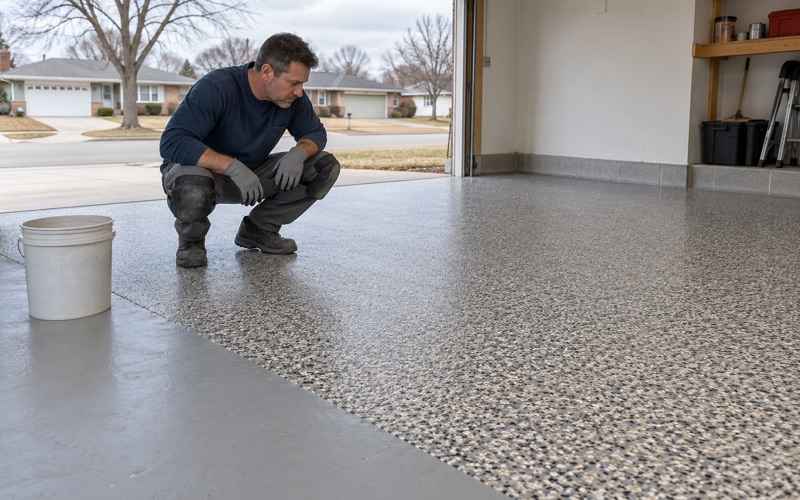
A garage floor takes road salt and calcium chloride brine off the tires all winter, plus hot tire pickup in summer. We build the system for that, test moisture before coating, and schedule curing against slab temperature and dew point. When an unheated garage is too cold to cure properly, we say plainly that it has to wait for spring.
Contracts and What a Coating Can Promise
Every home job gets a written contract before any deposit, as Wisconsin’s ATCP 110 home improvement rule requires, with the products and any warranty written in. Warranty exclusions are read out before the job is sold, and moisture is named first among them.
A coating is a film that follows the slab under it, so it will not stop a crack from moving or a slab from settling. We say that before the job starts, along with any repair the concrete needs first. That way the floor you get matches the floor you were promised.
- 20+ Years on Concrete
- Moisture Tested First
- Written System Proposals