Kenosha Epoxy Flooring brings more than 20 years of concrete coating work to epoxy flooring in Somers, from basements being turned into finished rec rooms to two-car garages and large distribution floors. Every job starts the same way: we look at the slab, test it for moisture and decide what it can actually carry before anyone talks about color or flake.
Most calls we get from Somers homeowners are about one of two rooms. The basement is becoming a place to live, play or work out, or the garage floor has been eaten by a few winters of salt. Each room calls for a different system, a different curing plan and a different conversation about paperwork, so we treat them as separate jobs rather than one product sold twice.
What you get from us is a written scope that names the product, the system build and the finished thickness. You can hold the finished floor up against that page. We also tell you plainly when a slab needs repair before it can be coated, because a coating laid over a failing floor only hides the problem for a season.
Coating a Basement Floor for a Somers Rec Room
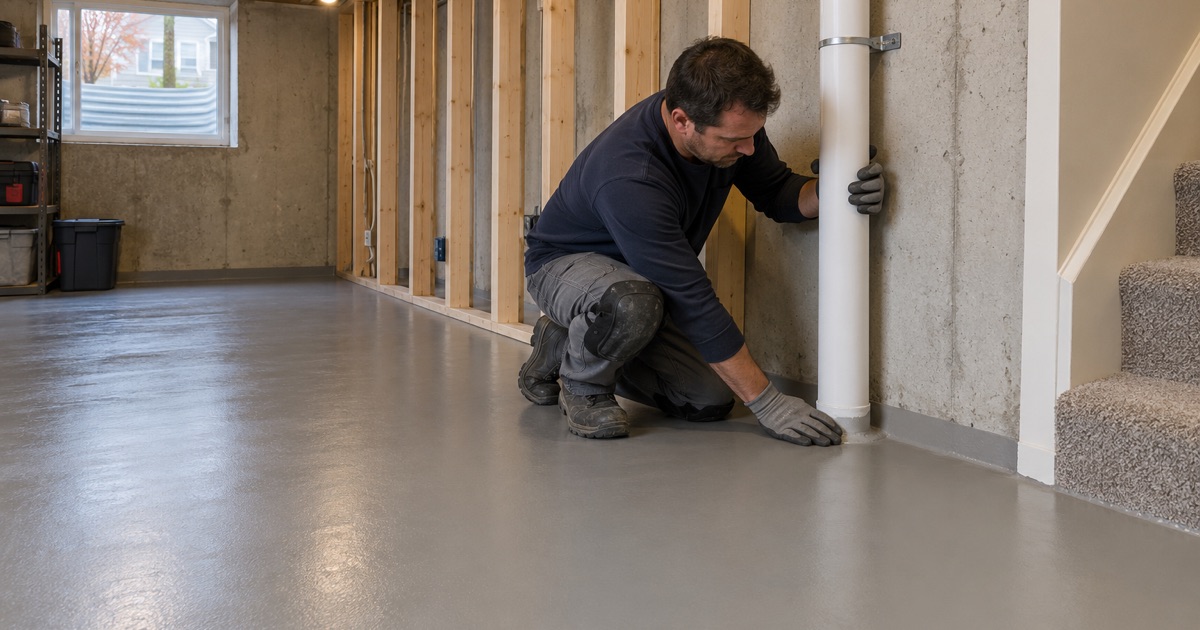
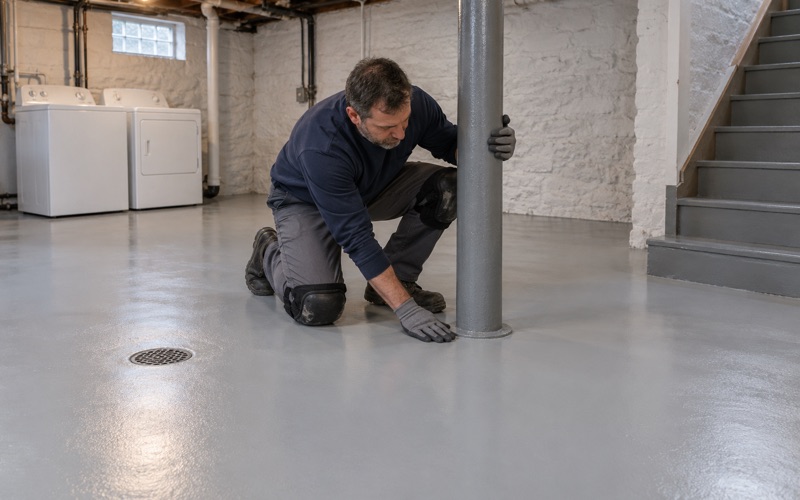
A rec-room conversion is the most common reason a Somers basement floor gets coated. The floor is about to carry furniture, foot traffic and maybe a home gym, and the owner wants something cleaner and brighter than bare concrete. That is a good use for epoxy, provided the slab underneath is ready for it.
Testing for Moisture Before Anything Else
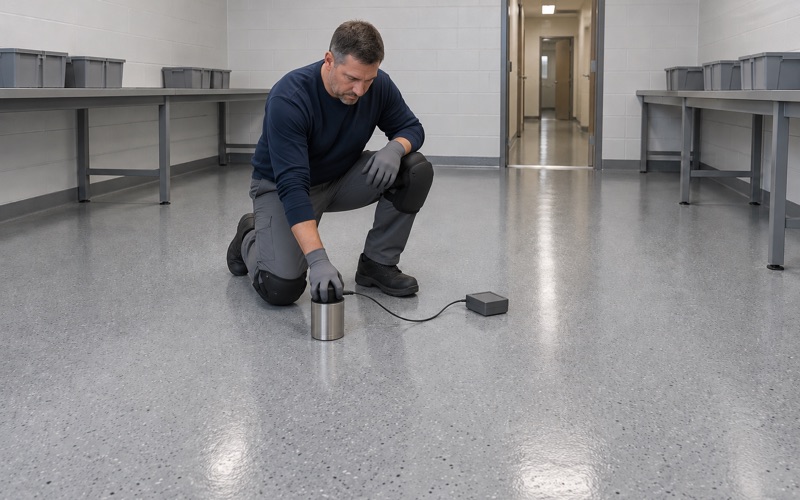
A basement slab sits against soil, and water vapor moving up through it is the most common reason a basement coating blisters or lets go. We write moisture testing into the scope as its own line item, using ASTM F1869 calcium chloride tests or ASTM F2170 in-situ relative humidity probes depending on the slab. A quick ASTM D4263 plastic sheet test can flag a problem, but it does not give us a number.
If the readings come back high, the plan changes before the price is final. We may call for a moisture-mitigation primer under the system, or we may tell you the floor needs drainage work at the sump pit or floor drain first. Hydrostatic pressure under a basement slab and the white efflorescence it leaves behind are signs we point out rather than coat over.
Opening the Slab Mechanically
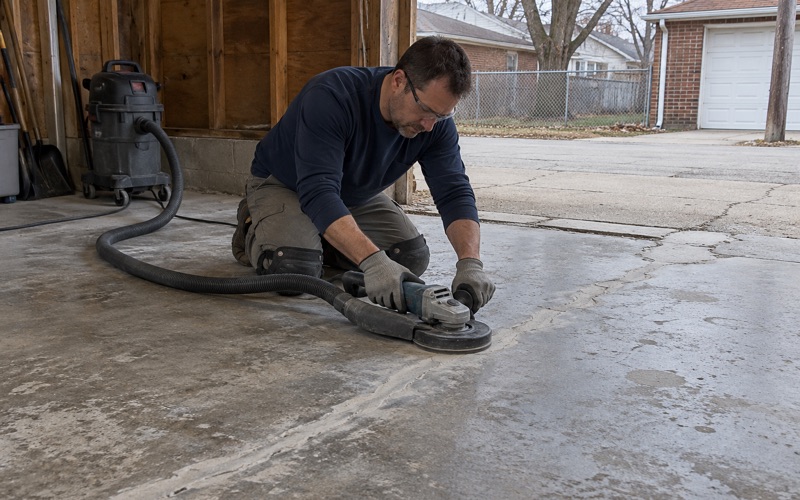
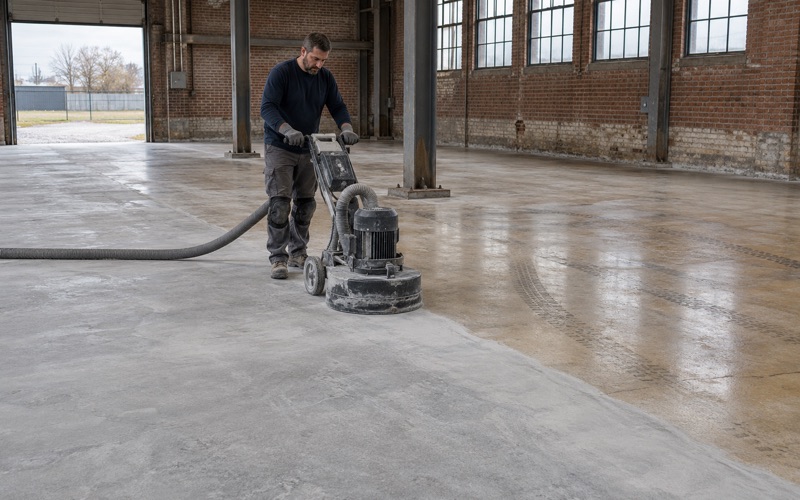
We never acid etch a basement floor. Every slab is opened with a diamond grinder or a shot blaster to a measured ICRI concrete surface profile, which gives the primer something to bite into. Etching leaves acid residue and an uneven profile, and in a basement with limited airflow that is the last thing a coating needs underneath it.
Grinding is dusty work, so the grinder runs with a vacuum and the dust and any slurry are collected on site. Nothing gets washed down a floor drain or out toward the street. Before we grind, we read the cracks, joints and any old paint or sealer, and we tell you if a section has to be patched or cut out first.
Choosing a System for a Living Space
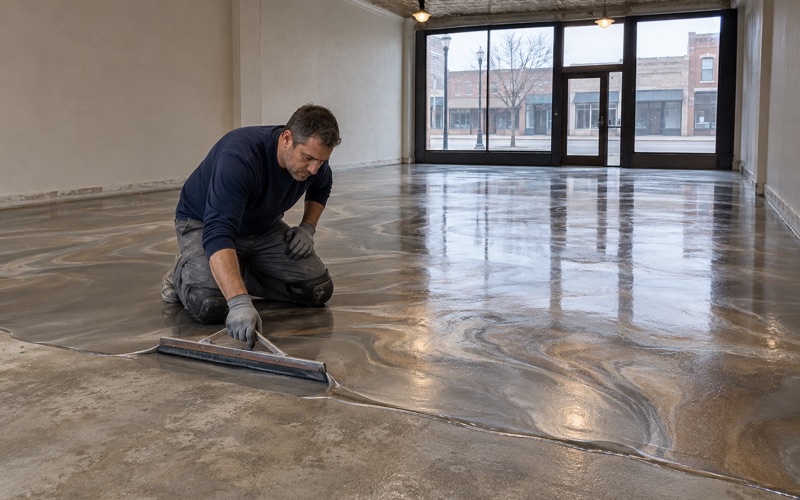
A rec room does not need the same build as a shop floor. Most of these jobs get a 100% solids epoxy base with a vinyl flake broadcast for texture and a polyaspartic or polyurea topcoat that stands up to furniture legs and rolling chairs. A quartz aggregate broadcast is an option where you want more grip near a bar or a laundry area.
We also explain what a coating cannot do. It is a film that follows the slab under it, so a crack that is still moving will telegraph through in time. We read warranty exclusions aloud before the job is sold, with moisture named first, so nobody is surprised by what is and is not covered later.
Looking for epoxy-flooring closer to Pleasant Prairie? See Epoxy-Flooring Services in Pleasant Prairie.
What the Village Permit List Covers and What It Leaves Out
The Village of Somers publishes its own list of required permits, and it is worth reading before a basement or garage project starts. The list is explicitly the most common permits rather than every permit, and the building inspector has the final word on any specific job.
The Basement Rec Room Line
Among the items the village names is a Basement Rec Room permit, alongside Residential Alteration and Commercial Alteration. The list does not name concrete, slabs or floor coatings anywhere. In practice, that means a floor coated as part of converting the basement into a rec room is tied to the rec-room project itself, which is the work the village has chosen to list.
A coating on a basement floor that stays unfinished is a different case, and it does not appear on the list by name. Because the list says it is not limited to what it shows, we do not tell a Somers homeowner either answer on our own. Wisconsin issues no license for floor coating work, so the local inspector is the person who settles it.
One Building Department for the Village and the Town
The village was incorporated in 2015 from part of the Town of Somers, and a smaller town remnant still exists. Both are served by one building department at 7511 12th Street, and one permit form covers the Village and Town of Somers. You do not need to work out which office to call based on which side of an old line the house sits on.
Some items on the village list carry an asterisk, which means a Kenosha County zoning permit is needed in addition to the village permit. The Basement Rec Room line is not one of those, while a detached garage is. Our concern is the floor, but we flag the distinction so the larger project does not stall waiting on a county sign-off nobody expected.
Asking the Inspector Before the Work Is Scheduled
Before we put a Somers job on the calendar, we call or ask you to call the building inspector at 262-859-2822 with a plain description of the work. Inspections in Somers are by appointment and are scheduled at least two business days ahead, so if the rec-room project has an inspection coming, the coating schedule has to fit around it.
That call usually takes a few minutes and saves a lot of guesswork. If the inspector wants the floor finished before or after a framing or electrical inspection, we sequence our grinding and coating days to match. Every home job also gets a written contract before any deposit is taken, as Wisconsin’s ATCP 110 home improvement rule requires, with the products and warranty written in.
Garage Floors in Somers Homes
About half of the housing in the village is single-family detached, and most of those homes have a garage floor that sees salt, slush and hot tires every winter. Somers is also a mix of owners and renters, so we hear from homeowners and from landlords looking for a floor that holds up between tenants.
Attached and Detached Garages
The village permit form lists Garage - Attached and Garage - Detached as separate checkboxes, which tells you the village thinks about the two buildings differently. For the coating itself, the difference that matters to us is heat. An attached garage often stays warmer through the winter, while a detached one tracks outdoor temperature closely.
We test both the same way before we coat. A garage slab that looks dry can still push moisture, and we would rather find that with a meter than with a blister a year later. If either floor has spalling, pitted areas or old coating that is peeling, we grind it back and repair it before the new system goes down.
Built for Road Salt and Brine
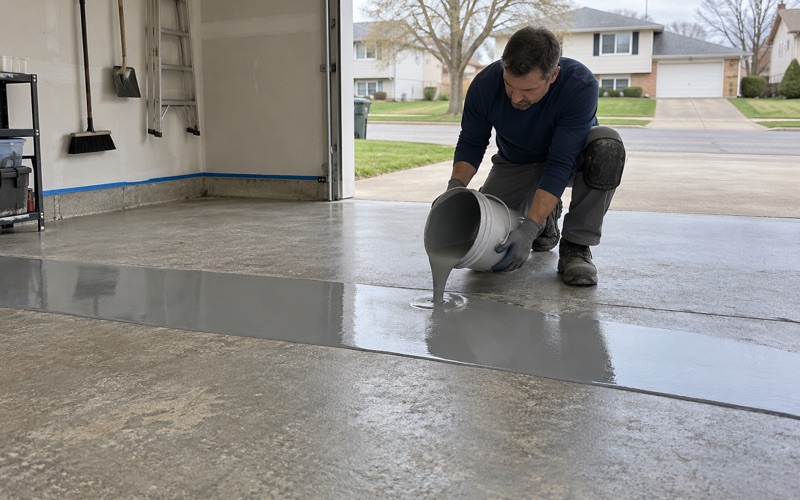
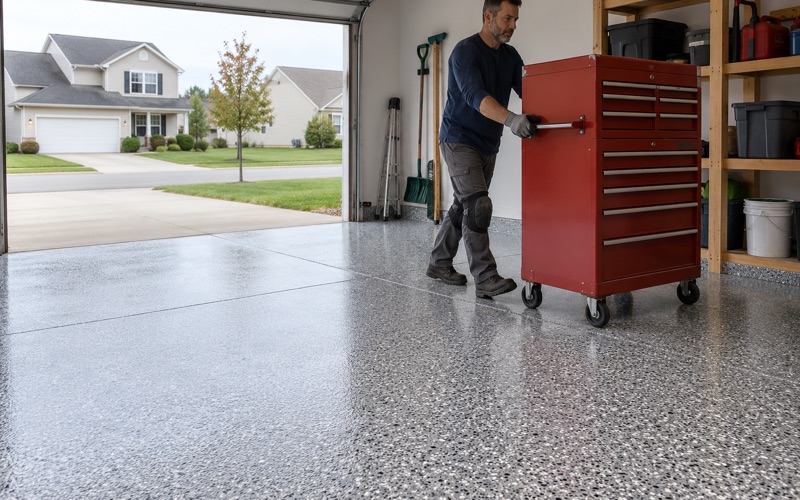
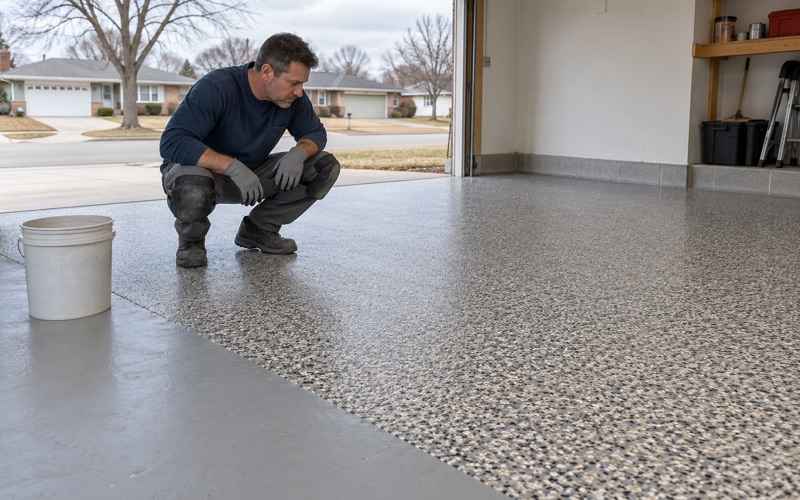
A Kenosha County winter means calcium chloride brine and rock salt riding in on the tires and sitting in puddles under the car for weeks. Those deicers attack bare concrete and break down weak coatings. We build Somers garage floors with a 100% solids epoxy base and a chemical-resistant polyaspartic or polyurea topcoat that rinses clean.
Hot tire pickup is the other common failure in garages, where a soft or thin coating lifts off under warm tires. A properly prepared surface and a full-thickness system prevent it. We also watch for amine blush on the epoxy base during cool, damp curing, because a topcoat laid over blush will not bond the way it should.
Curing Against Temperature, Not the Calendar
We schedule curing against slab temperature and the dew point spread at the slab surface, not against a date on the calendar. If the slab is too close to the dew point, moisture condenses on it and the coating suffers. A detached garage in January rarely meets those numbers without help.
When an unheated garage cannot hold the temperature a system needs, we say so and plan the job for spring. A floor coated in the wrong conditions can look fine on day one and fail by the next winter. Waiting a few months is a far cheaper outcome than grinding off a failed coating and starting over.
Warehouse Floors Along the I-94 Frontage
Somers has become a distribution center for the region. About five million square feet of warehouse and industrial space has been under construction or newly completed across five projects in the village, including First Park 94, Highland Commerce Center and Flint 94. Ariens has run its main distribution hub in the first First Park 94 building since 2016.
Joints, Forklifts and Wear Patterns
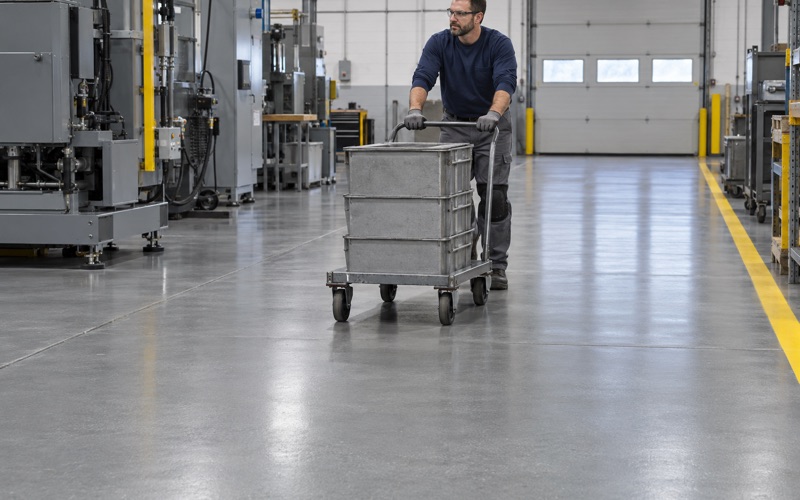
Large distribution floors fail first at the joints, where forklift wheels hammer the edges until they chip. We fill joints with a semirigid joint filler before any coating goes over them, so the wheels roll across a supported edge rather than an open gap. Aisles and dock areas get a heavier build than storage zones.
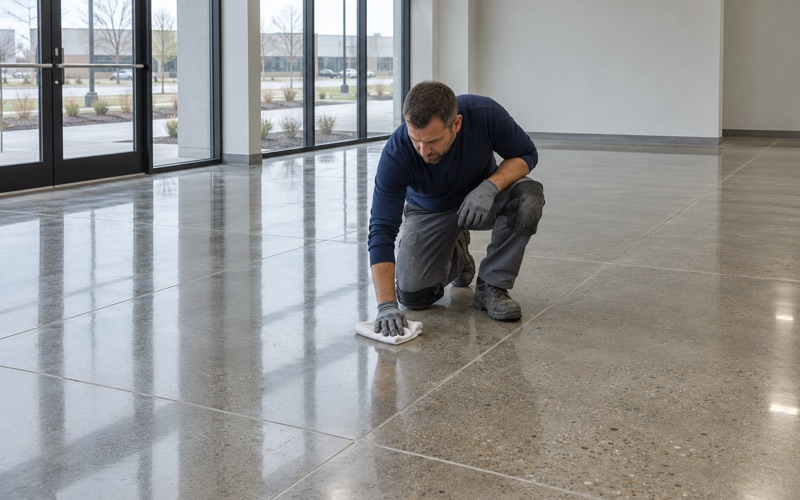
For bare concrete that only needs dust control and some sheen, a lithium silicate densifier is often the right answer instead of a full coating. Where chemicals, washdown or traffic striping are involved, we look at epoxy or urethane cement systems. Electronics and parts handling areas can call for static-dissipative or ESD flooring tested to a resistance range.
Working Around the Building’s Hours
A distribution building cannot shut down for a week while a floor cures. We schedule commercial work around the hours the building has to keep running, including overnight and weekend windows, and we phase large floors in sections so trucks and pickers keep moving. The phasing plan is written into the proposal so operations can plan around it.
Somers also straddles I-94, and the Kenosha County ozone nonattainment area runs east of and including that corridor. Wisconsin has no state VOC rule for architectural coatings, so products follow the federal 40 CFR 59 Subpart D rule on the manufacturer. We confirm product selection with you before work on either side of the highway.
Getting a Quote in Somers
A Somers quote starts with a visit to the floor itself. We measure, look at cracks and joints, note old coatings, and set up moisture testing where the slab calls for it. For a basement, we ask about the rec-room plans and whether you have talked with the building inspector yet.
The written proposal you receive names the product, the system build, the finished thickness, the surface preparation method and the curing plan. Warranty terms and exclusions are spelled out in it. If the slab needs repair or replacement before it can be coated, the proposal says so plainly rather than leaving it for the crew to discover.
- 20+ Years on Concrete
- Moisture Tested First
- Written System Proposals