Kenosha Epoxy Flooring has handled epoxy flooring in Salem Lakes and the rest of our service area for more than 20 years, and our plant work here starts with a question most crews skip: what has to happen to the room after we leave? A floor inside a production building is rarely just a floor. It sits under equipment, foot traffic and, in some buildings, a quality system that decides when product can move again.
In a medical-device or packaging plant, the room may be classified, and a new floor changes it. We plan that kind of job around the owner’s production schedule, the cure the coating needs, and the cleaning and testing the owner runs before the room goes back into service. The coating crew does not decide when a room is ready; the owner’s quality people do.
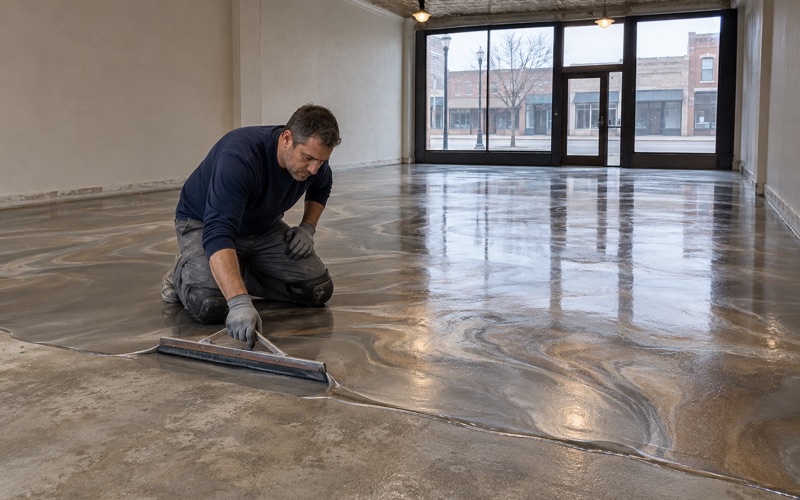
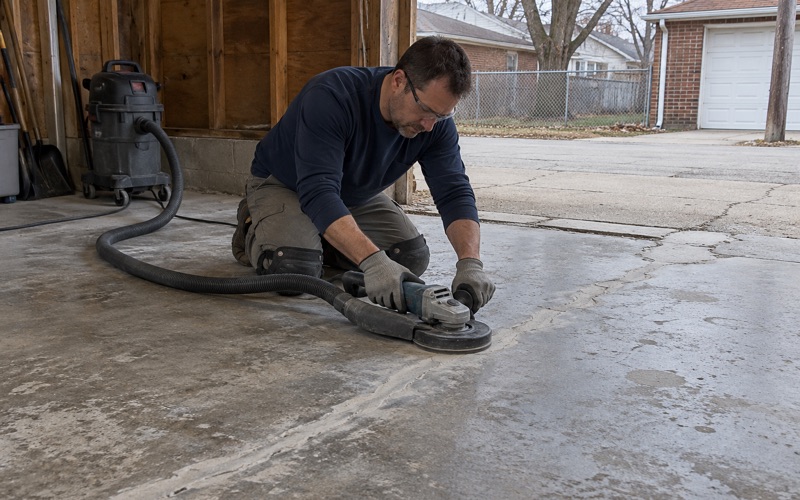
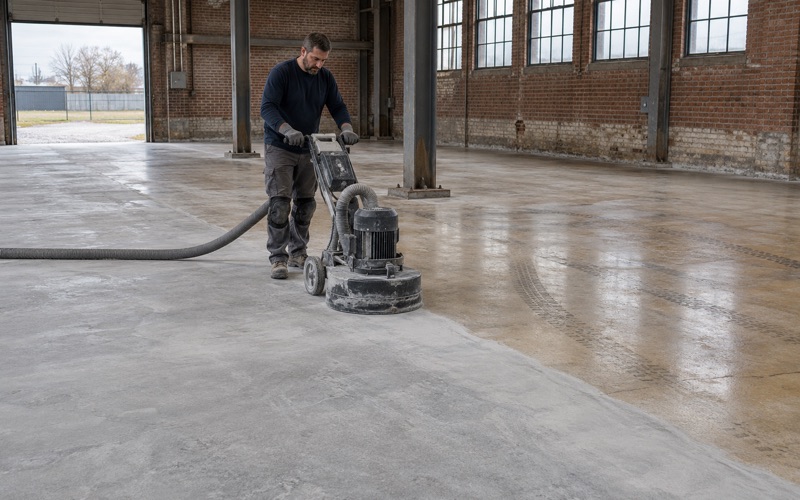
Outside those rooms, the same buildings carry converting lines, warehouse aisles and loading areas that need a working floor. Every slab we coat is opened with a diamond grinder or shot blaster, never acid, and the proposal names the product, the system build and the finished thickness. That way a plant manager can check what was quoted against what went down.
Medical Cleanrooms in the Salem Business Park
What the Park Holds
The Salem Business Park sits on Wilmot Road just west of State Highway 83, about 10 miles west of I-94, and it has drawn manufacturers across the state line. Vonco Products moved there from Illinois in 2017, and a 2020 release from the governor’s office said Advent Tool & Manufacturing was relocating its headquarters and production from Antioch, Illinois, into a new 25,000-square-foot building in the park.
Vonco’s own pages describe three Class 7 cleanrooms, over 4,724 square feet of HEPA-filtered cleanroom and FDA-registered facilities, with ISO 13485:2016 certification for its contract manufacturing. The company advertises those rooms as available around the clock based on production demand. We have not worked in those rooms or read the company’s procedures, and we mention them because they show what kind of floor question this park raises.
A Floor Job Changes a Qualified Room
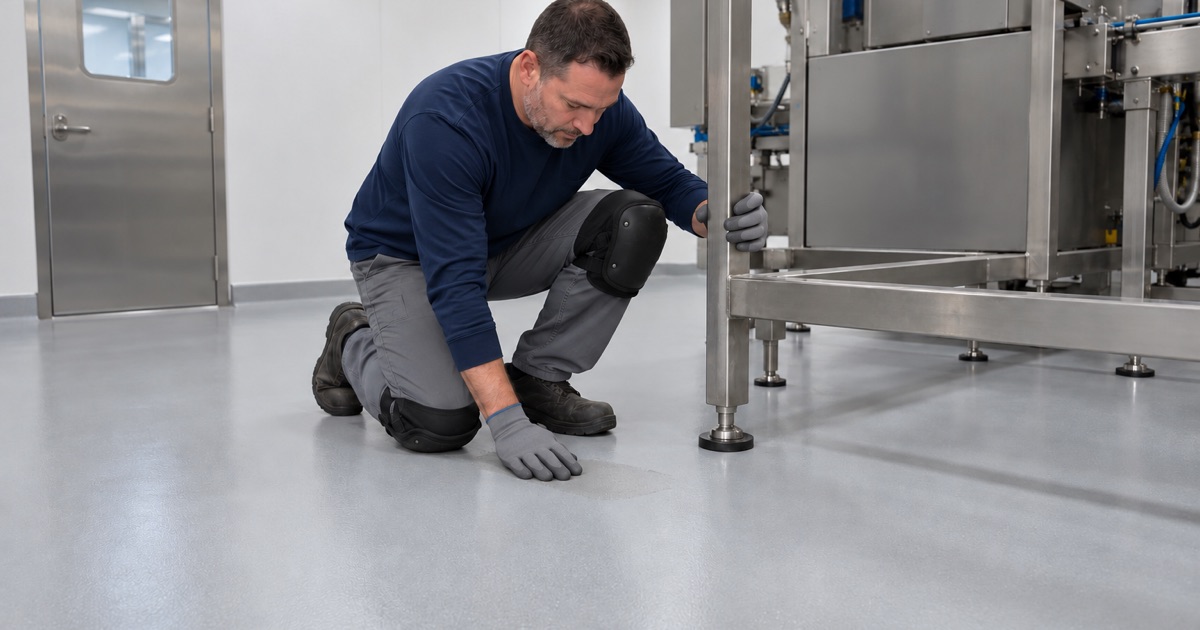
A certified cleanroom is classified by the count of airborne particles in it, and that classification belongs to the room as tested, not to any material inside it. No coating carries a cleanroom certification of its own. When the floor is ground, coated or repaired, the room has been altered, and the owner has to show it still meets its class.
That is why we treat a cleanroom floor as a change to a qualified space rather than a routine recoat. The owner’s quality system under ISO 13485 decides what testing and documentation the change triggers. Our job is to give that system what it needs: a clear scope, a named product, a firm schedule and a room handed back in a condition the owner can clean and test.
What We Ask Before Quoting
Before we price any work inside a classified room, we ask who in the plant owns the change, what notice the quality group needs and which areas stay in production while we work. We also read the existing slab, its cracks, joints and any old coating, and say plainly when it needs repair before a coating can go down. Repair found halfway through a shutdown is the kind of surprise a production gap cannot absorb.
Looking for epoxy-flooring closer to Lindenhurst? See Epoxy-Flooring in Lindenhurst.
Working Inside a Production Gap
Fitting the Job to the Room’s Downtime
A cleanroom that runs on production demand does not have a slow season to offer, so the floor has to fit a window the plant chooses. We build the schedule backward from the hour the owner wants the room returned for cleaning, then count the grinding, coating and cure time that has to fit before it. If the window is too short for the system, we say so before the job is booked.
Overnight and weekend windows are normal for us in plants that cannot stop for long. What changes in a classified room is that the window has to cover more than our work: the owner’s clean-down and re-test sit inside the same shutdown. A schedule that ends when the last coat goes down is a schedule that runs over.
Containing the Dust From Surface Preparation
Opening a slab with a diamond grinder or shot blaster is the right preparation, and it is also the dirtiest part of the job. In a building with a classified room, the dust has to stay out of the spaces that are still running. We collect grinding dust and slurry at the machine and plan the containment with the plant before the first pass.
The grinding produces an ICRI CSP profile the primer can bond to, and it removes the weak surface layer an acid wash would leave behind. We do not acid etch, partly because a wet etch and rinse adds water and residue to a room the owner then has to clean back to its class. Dry mechanical preparation is easier to contain and easier to clean up after.
Moisture Testing Before the Window Opens
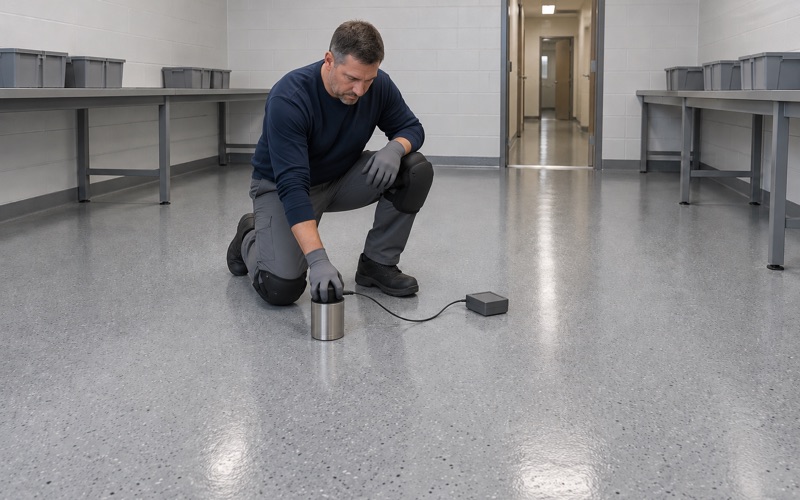
A blister found after the room is back in service is the worst outcome of all, because fixing it means another shutdown. Moisture testing is a line item in our scope, using ASTM F2170 in-situ relative humidity probes or ASTM F1869 calcium chloride tests, and we run it ahead of the production gap rather than during it.
If the readings call for a moisture-mitigation primer, that changes the cure time and the length of the window, and the plant needs to know before it commits a date. Warranty exclusions are read out before the job is sold, with moisture named first. Nobody wants that conversation in the middle of a shutdown.
Cure, Clean-Down and Re-Testing Before Product Returns
Cure Is Set by the Slab, Not the Clock
A coating that feels dry to the touch has not finished curing, and cleaning or loading a room too early can mar a film that has not fully hardened. We schedule cure against slab temperature and the dew point spread at the surface, not against the calendar. Inside a conditioned plant those numbers are steadier than in a garage, but we still read them.
Amine blush is the other thing we check before handing a room back. Some epoxies form a waxy film on the surface as they cure in humid air, and a blushed surface has to be dealt with before cleaning starts, not discovered by the cleaning crew. We note the cure conditions and the time the room becomes ready, so the owner’s schedule rests on a recorded time rather than a guess.
Handing the Room Back for Clean-Down
When our part is done, the room still is not ready for product. It goes back to the owner for cleaning, and in a classified space that cleaning follows the plant’s own procedure. We remove our equipment, containment and waste in the order the plant asks, so the clean-down starts from a known state rather than from whatever we left behind.
We also agree in advance where the boundary of our work sits. If we coat a room but not the corridor outside it, the plant knows exactly which surfaces are new and which were untouched, which matters when the quality group writes up the change. A fuzzy edge on the drawing becomes a fuzzy edge in the record.
Re-Testing for the Room’s Class
Before medical product goes back in, the owner re-tests the room for its class. What that re-test includes, and who signs it off, is decided by the owner’s quality system, not by the coating crew. We do not claim any floor makes a room pass; the room passes or fails on its own test.
What we can do is make the re-test less likely to turn up a problem we caused. That means a finished floor with no loose aggregate at the edges, no uncured spots and no grinding residue in corners, plus a written record of exactly what went down. If the owner’s procedure asks for anything more from us, we want to know before the work begins.
Converting Floors and Shutdown Questions in Salem Lakes
Converting Lines and Warehouse Floors
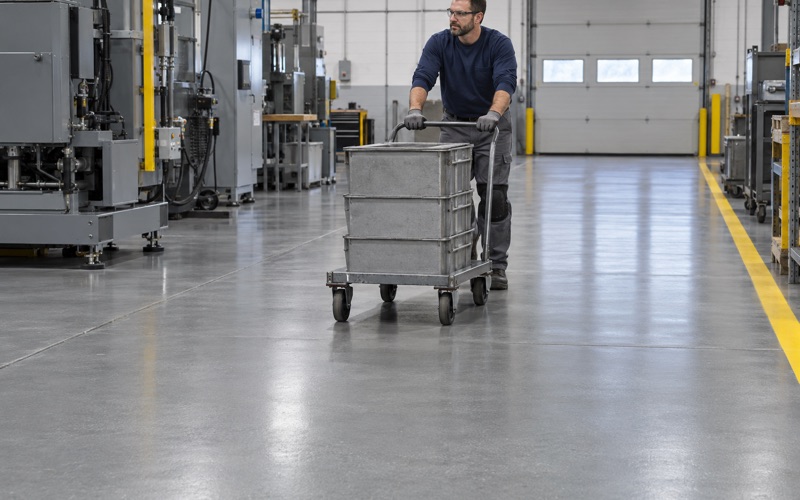
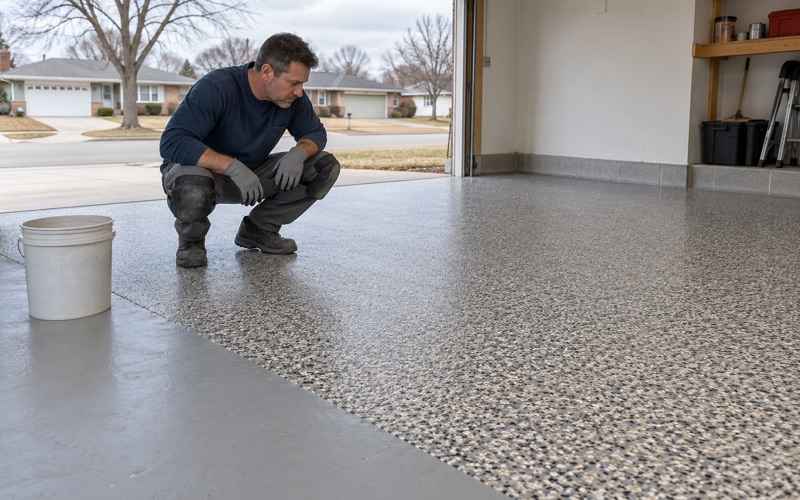
Most of a packaging plant’s floor sits outside the cleanroom walls. Vonco lists over 40 converting lines, and lines like those, along with the warehouse and shipping areas around them, need floors that take forklift traffic, pallet loads and steady cleaning without the documentation load of a classified room. For those floors we usually look at 100% solids epoxy with a quartz aggregate broadcast where traction matters.
Warehouse joints are filled with a semirigid filler before any coating goes over them, so forklift wheels do not break the joint edges. A coating is a film that follows the slab under it, so a moving crack will show through, and we say that before the job rather than promising otherwise.
Plants Moving In From Illinois
A manufacturer relocating into the park, as Vonco did in 2017 and Advent announced in 2020, often has a short window between an empty building and running equipment. That window is the simplest time to settle the floor, because nothing has to be moved, shut down or contained around a live line. We plan these jobs around the move-in date the owner is working to.
In 2021 Vonco filed plans with the DNR for a 79,500-square-foot addition on an adjacent parcel, a project that depended on approval to fill some wetlands. The park itself was reported in 2021 as set to grow by about 88 acres, and every new production space raises the same scheduling questions.
What Plants Ask Us About Shutdowns and Paperwork
One question to settle early is how long the room will be out. The honest answer depends on the slab’s moisture readings, the system chosen and the cure conditions, which is why we test first and quote a window rather than a promise. Another is what we put in writing, and the answer is the product, the build, the thickness and the cure record.
Wisconsin issues no license for floor coating work, so we confirm with the village building inspector whether a job needs a permit before it is scheduled. In Salem Lakes, permit applications go through the Kenosha County online permitting portal, and the village’s contracted inspector is the person to ask. We would rather have that answer before a shutdown is booked than after.
- 20+ Years on Concrete
- Moisture Tested First
- Written System Proposals