Kenosha Epoxy Flooring installs metallic epoxy floors in Kenosha, WI, serving surrounding cities including Somers, Pleasant Prairie, Bristol, Sturtevant and Winthrop Harbor. With 20+ years on concrete, we know the marbled, three-dimensional look of a metallic floor depends far more on the slab underneath and the hands applying it than on the pigment in the bucket.
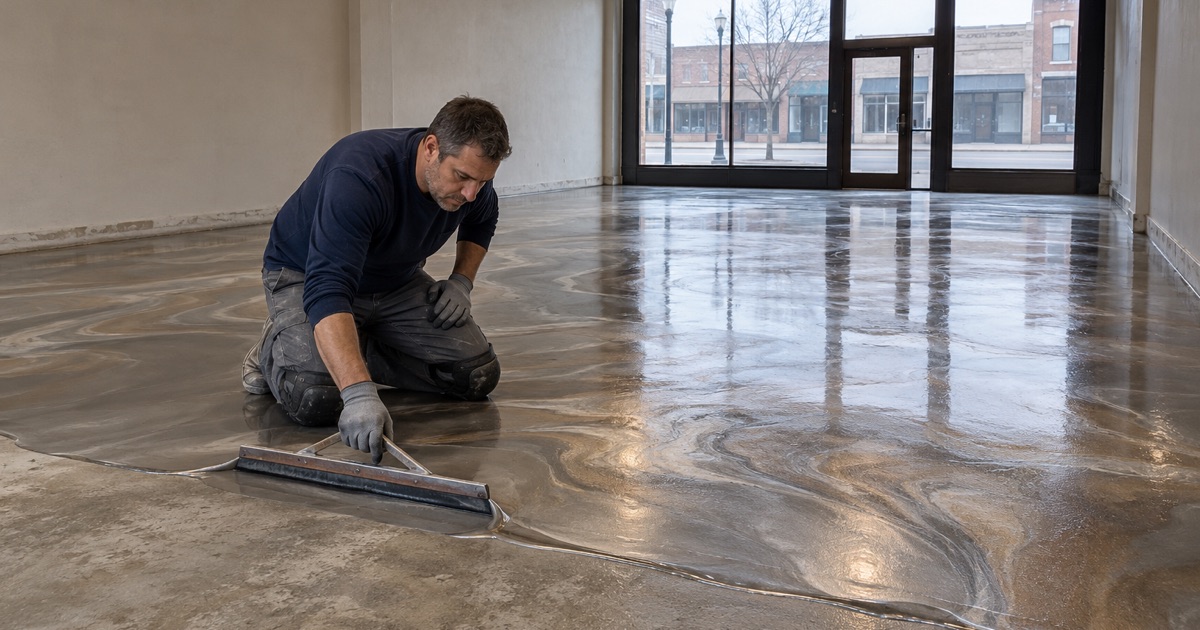
Metallic epoxy is a decorative system. Metallic powders mixed into a clear or tinted epoxy move as the coating is spread and as it levels, creating swirls, veins and depth that look like polished stone or liquid metal. It is the most expressive floor we install, and also the least forgiving of shortcuts.
Every metallic floor we build starts with mechanical grinding, repairs and a written moisture test. Our proposals name the base, the metallic coat, the topcoat and the finished thickness, and we make sample boards in your chosen colors before work begins so you know what to expect.
Where Metallic Epoxy Floors Work Best
Basements and Living Spaces
Metallic floors are a popular choice for finished basements, bars, media rooms and home offices, where the floor becomes a design feature rather than just a surface. They pair well with modern and industrial interiors and can be tinted to match cabinets or walls.
Basements still bring the moisture question. We test the slab before coating, and if readings are high, a moisture-mitigation primer goes down first. A metallic floor blistering from vapor is a costly repair, because the decorative layer cannot be patched invisibly.
Showrooms, Salons and Retail Spaces
In a showroom, salon, boutique or restaurant dining area, a metallic floor gives a high-end look at a cost that is often lower than stone or terrazzo. The seamless surface is easy to clean, and the right topcoat stands up to foot traffic and rolling displays.
We schedule commercial metallic installs around business hours, including overnight and weekend windows, and plan the sequence so each room can cure undisturbed. Logos and borders can be designed into the floor at the same time.
Show Garages and Hobby Spaces
Some owners want a garage that looks like a showroom for a collector car or a workshop that feels like a studio. A metallic floor with a tough topcoat delivers that look. It shows scratches, tire marks and winter salt residue more readily than a flake floor, so it suits lighter-use garages best.
For garages that see daily use and Kenosha winters, we often suggest pairing a metallic floor with good entry mats, a regular rinse routine and a topcoat chosen for hot tire pickup.
How Metallic Epoxy Is Built
Grinding and Flattening the Slab
A metallic layer flows across the slab and settles, which means every low spot, trowel ridge and patch line can show through. We grind with diamond tooling to open the surface and remove old coatings, then fill cracks and pits and grind them flush. On uneven slabs, we may add a leveling base before the decorative coats.
We never acid etch. Etching leaves an uneven profile and residue that a metallic floor reveals in the finished surface. Grinding dust and slurry are collected on site and never washed toward a drain or the lake.
Base Coat and Color Foundation
A tinted base coat sets the background color for the metallic layer and gives it a uniform surface to bond to. The base color strongly affects the final look: a dark base makes metallic tones look deep and dramatic, while a light base brightens them.
The base coat also seals the concrete and builds thickness. On slabs with moisture readings near the limit, we use a moisture-tolerant primer under it, as the test results dictate.
Working the Metallic Layer
The metallic coat is mixed, poured and worked by hand with rollers, trowels and sometimes sprayed solvent or air to create movement. Two installers working the same floor will produce different patterns, so we agree on the technique and look using samples before the pour.
Working time is limited, and the layer has to be finished while it can still move. We stage material and crew so the wet edge never stops, which avoids visible seams between batches across a large floor.
Protecting a Metallic Floor
Choosing the Topcoat
Epoxy alone can scratch and amber in sunlight. We seal metallic floors with a clear topcoat chosen for the room: an aliphatic polyaspartic or polyurethane where ultraviolet stability and abrasion resistance matter, often with a gloss level you choose. Satin finishes hide light scratches and dust better than high gloss.
Where water may reach the floor, such as entries, bars or garages, we can add a fine anti-slip additive to the topcoat. It slightly softens the reflection but makes the floor safer.
Curing Against Temperature and Dew Point
Metallic coats are sensitive to temperature and humidity while curing. If the slab is too cold or the surface sits too close to the dew point, the coating can develop amine blush, haze or a weak bond between coats. We measure slab temperature and dew point spread before each coat and reschedule rather than push through.
In an unheated garage in winter, that may mean waiting for spring. A metallic floor that cures badly cannot be fixed with a quick touch-up.
Maintenance and Refreshing the Shine
A metallic floor is maintained by keeping grit off it. Dust mopping, entry mats and pH-neutral cleaners keep it looking new. Pads under furniture and care when moving equipment prevent scratches.
When the topcoat wears in traffic paths, it can be abraded and recoated to restore the gloss without touching the metallic layer beneath. That is one more reason to start with a properly bonded, well-prepared floor.
Planning a Metallic Epoxy Floor
Samples, Colors and Expectations
Because each metallic floor is unique, we make sample boards in your chosen colors and show photos of finished floors with similar combinations. We explain how much of the pattern can be directed and how much will form naturally.
Lighting changes how a metallic floor reads, so we look at samples in the room itself where possible. A color that glows under daylight from a walkout basement door can look much darker under recessed lights at night, and choosing in the actual space avoids that surprise.
What Drives the Price
The cost of a metallic floor depends on slab condition, the amount of leveling needed, the number of colors and the topcoat. Heavy preparation on an old or uneven slab is usually the biggest variable. We quote after seeing the floor, with each part of the system named.
We also read the cracks, joints and old coatings before pricing. If a slab needs repair or replacement before it can carry a decorative floor, we tell you then, rather than discovering it after the metallic layer has been poured over a problem it cannot hide.
Contracts and Warranty Terms
For home projects, the written contract comes before any deposit, as Wisconsin’s home improvement rule requires, with products and warranty terms spelled out. We read out the exclusions in advance, starting with moisture, so you know exactly what is covered.
Wisconsin issues no license for floor coating work, so before a commercial or residential metallic job is scheduled, we check with the local city or village inspector whether any permit applies. For jobs across the state line, we choose coatings that meet Illinois limits on VOC content for architectural coatings.
Pairing Metallic With Other Finishes
Metallic does not have to cover every square foot. Some owners use it for a bar area, entry or showroom floor and pair it with a flake or solid color system in storage and utility spaces. Saw-cut lines or a border can separate the finishes cleanly, and planning the layout in the proposal keeps the transitions crisp and the budget focused where the floor is seen most.
- 20+ Years on Concrete
- Moisture Tested First
- Written System Proposals