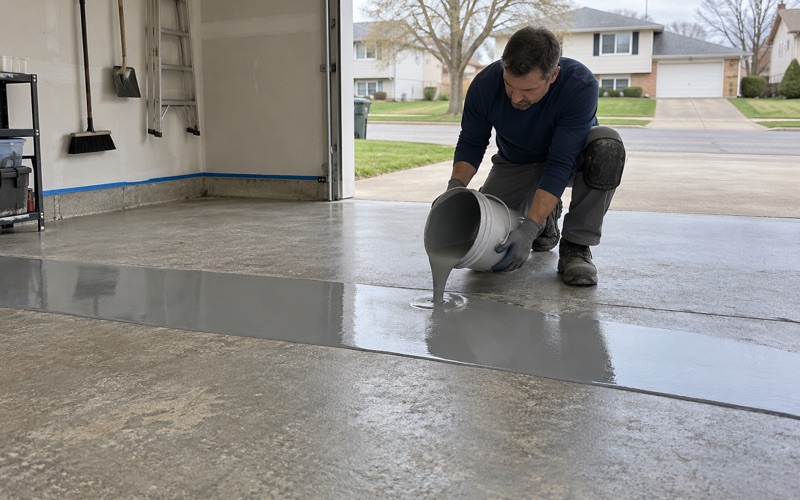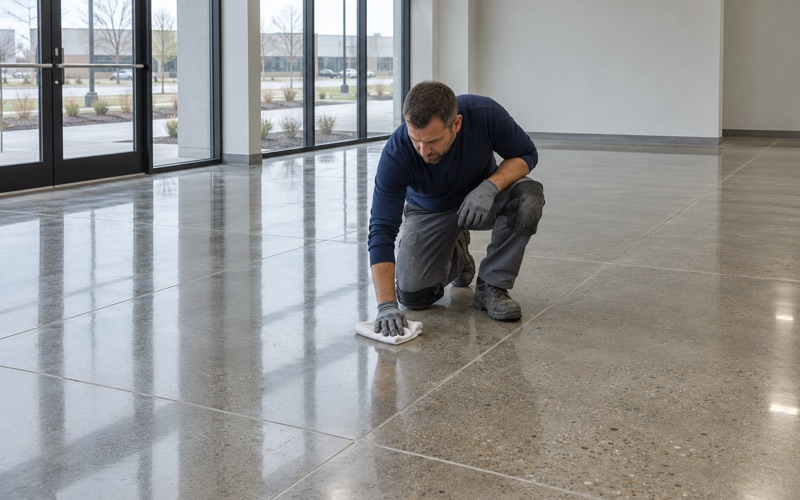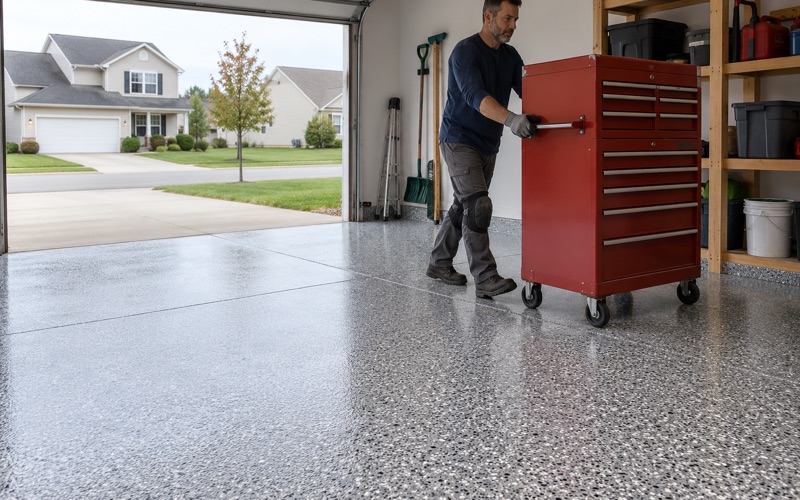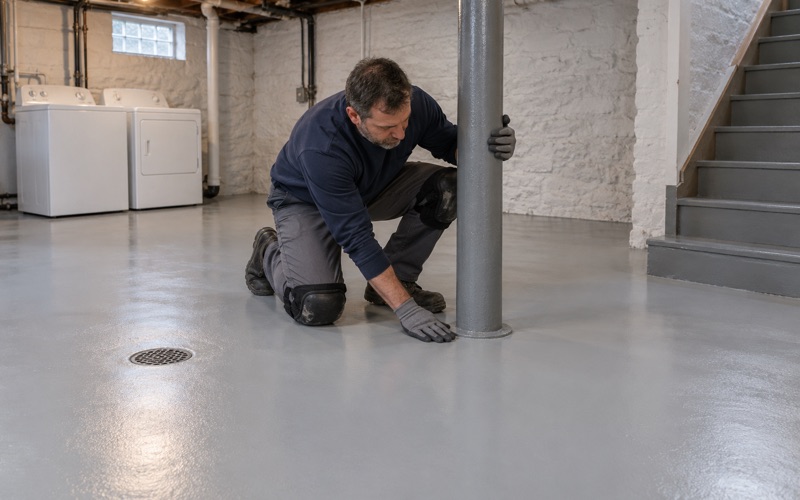
Kenosha Epoxy Flooring has spent more than 20 years on epoxy-flooring in Lake Villa and the rest of our service area, and a lot of that work ends with something being stuck to the floor we just finished. In a warehouse that means barcode labels at every rack location and painted or taped lanes for forklifts. The coating is no longer the last layer, so we plan it as the base for whatever comes next.
That changes the questions we ask at the walk-through. We want to know what goes down after us, who is applying it, and when the building needs to run traffic again. A floor that looks perfect on our last day can still let a label lift a month later if the topcoat or the cure was wrong for the job.
The same discipline carries into homes. Garage owners get the same slab reading, moisture test and written scope that a distribution floor gets, because a residential slab fails for the same physical reasons a commercial one does.
Floors That Have to Hold Labels and Lane Lines
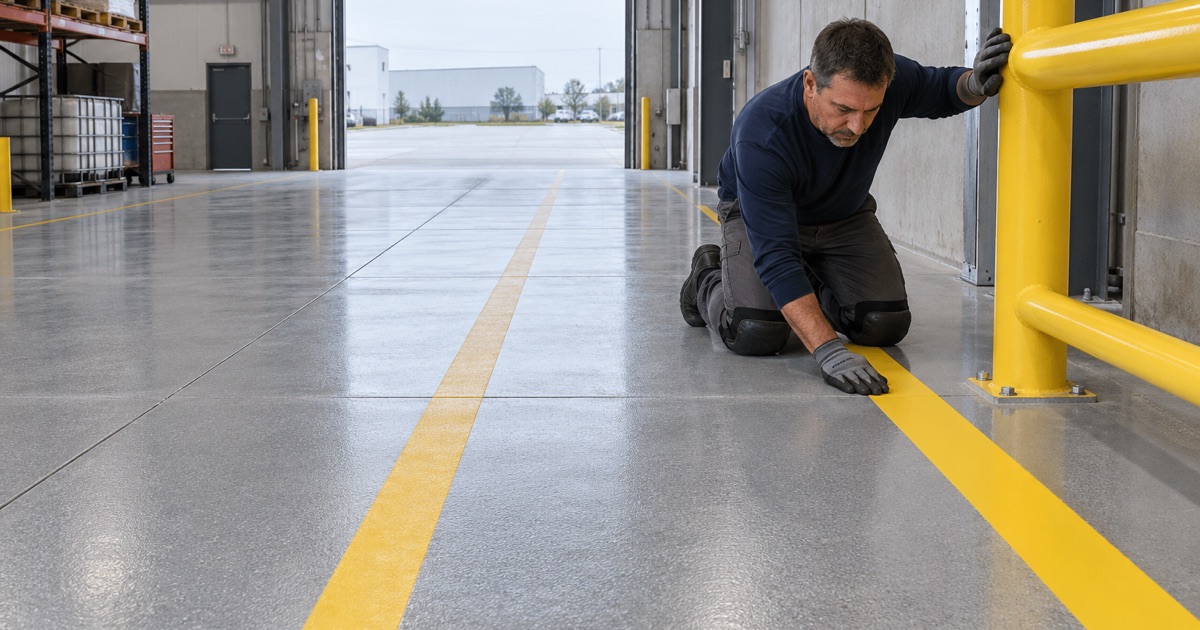
Most coating pages stop at the shine. In a working warehouse, the finished surface is a substrate for labeling and marking, and the people who do that work have their own requirements.
What a floor label maker asks for
ID Label, Inc. is a Lake Villa company on Park Avenue that makes warehouse labels and signs, including rack, bin and floor labeling, and it offers a floor striping service. Its floor-label instructions are short: clean the floor, apply the barcode label, add the protective overlay, and allow 24 hours before traffic. It also says surfaces should be clean and dry at the time of application.
Its list of suitable surfaces includes sealed concrete, and the labels are described as standing up to forklifts, pallets and carts. Nothing on that page talks about epoxy, and we do not speak for the company. What the instructions tell us is what any adhesive label wants from the floor under it: a clean, dry, intact surface.
The topcoat is the bonding surface
Once a slab is coated, the label never touches the concrete again. Its adhesive grabs the topcoat, and the striping paint or tape does the same. If that top layer is soft, contaminated, slick with amine blush or still curing, the weakest bond in the stack sits right under the label.
That is why we treat the topcoat as part of the labeling plan rather than a cosmetic choice. A tough, fully cured film with a clean surface gives the label and the overlay something stable to hold. A dusty, chalky or partly cured one gives them a reason to curl at the edges.
Choosing the system with marking in mind
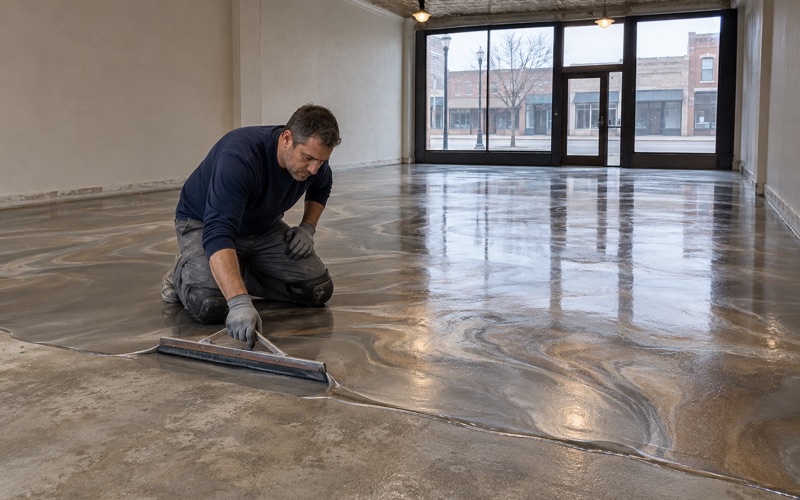
On a warehouse floor we usually build on 100% solids epoxy and then pick a topcoat for abrasion, chemical exposure and how the marking will be applied. Polyaspartic and polyurea topcoats cure quickly and resist wear, which suits a building that cannot sit idle for long. Texture matters too, since a heavy quartz aggregate broadcast improves footing but gives a flat label less contact area.
We talk through where the rack labels and lanes will go before we choose a finish. Smoother bands can be planned along the aisle faces where labels sit, with more grip where people walk. No coating guarantees that every label or tape will stay put, and we say so plainly.
Looking for epoxy-flooring closer to Park City? See Epoxy-Flooring in Park City.
Cure Time Before Tape, Labels and Forklifts
Cure is where most label failures on new floors begin. The coating can feel hard long before it is ready for adhesive or wheels.
Walk-on is not the same as ready
Every resin has a window for foot traffic, a longer one for forklifts, and a full chemical cure after that. Labels and tape belong at the far end of that schedule, after any solvents or reactive components have finished leaving the film. Applying them too early can trap what the coating is still releasing.
We schedule cure against slab temperature and the dew point spread at the surface, not the calendar. A cold slab in winter cures slower than the data sheet suggests, and condensation on a fresh film can cause blush that later weakens adhesion. Then the label maker’s own 24-hour wait before traffic still applies on top of our coating cure.
Planning around a building that has to keep running
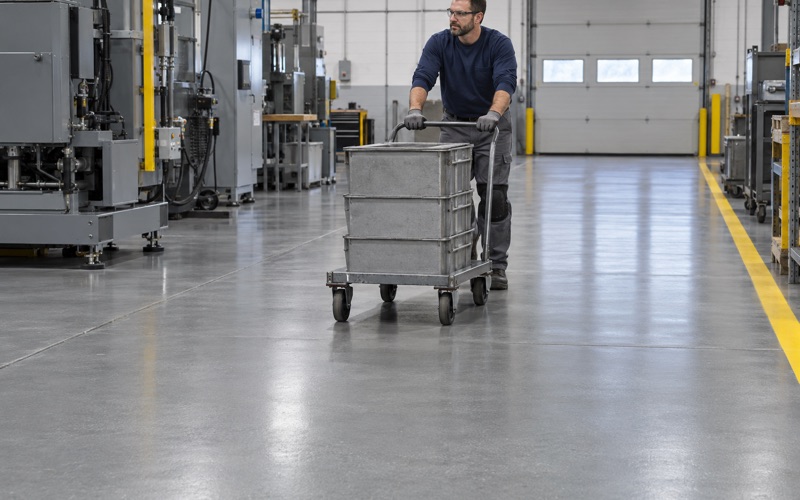
Warehouse and shop floors rarely get a week of downtime. We can work overnight and on weekends, phase a floor by zones and hand back aisles in sequence so receiving or shipping keeps moving. The marking crew then follows us zone by zone once each section is cleared.
We put the coating cure, the striping date and the label date on one written schedule. That keeps a well-meaning supervisor from sending a striping crew onto a floor the same afternoon it was rolled. It also tells the labeling team exactly when each zone is theirs.
Joints get filled before any lines go down
Control joints run straight through many aisles, and a lane line or label that crosses an open joint breaks with the joint edge. We fill warehouse joints with a semirigid joint filler before coating, so forklift wheels do not chip the edges and the surface stays continuous under the marking.
We also tell owners that a coating is a film that follows the slab. If a crack is moving, the coating and any stripe over it will follow that movement, and no topcoat will stop it.
Park Avenue Shops and Lake Villa Garages
Lake Villa sits in Lake Villa Township in Lake County, Illinois, and its building stock splits between a light-industrial strip and a large share of newer homes. Each side brings its own floor problems.
Sheet metal, assembly and storage floors
Park Avenue carries the village’s working buildings. FORCE Manufacturing, at 266 Park Avenue, has done sheet metal and electro-mechanical assembly since 1998, and the street holds other assembly and warehouse space. Floors like these see dragged parts, cart wheels, cutting fluids and pallet jacks all day.
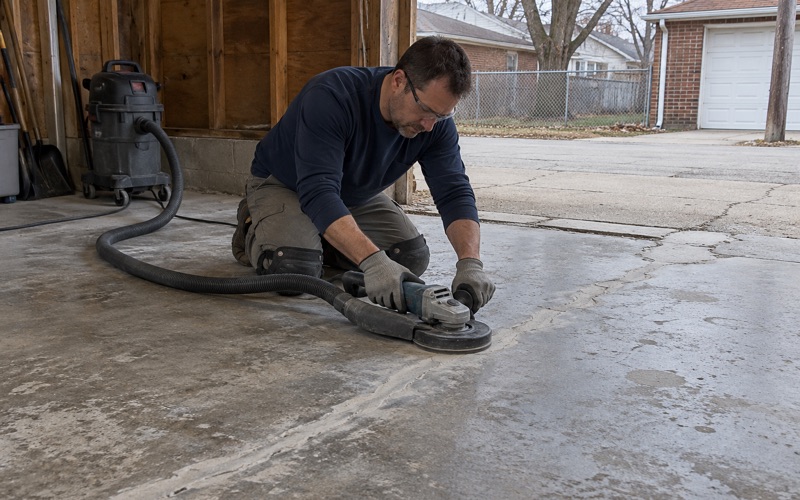
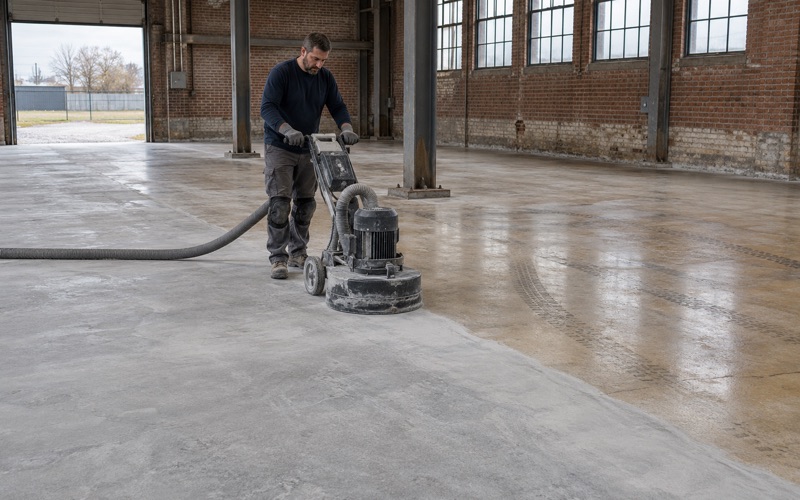
For those floors we open the slab with a diamond grinder or shot blaster to a measured ICRI CSP profile, and we never acid etch. Grinding dust and slurry are collected on site rather than rinsed toward a drain. The result is a bond the coating can count on, and in turn a topcoat that labels and striping can count on.
Garages from the 1990s and 2000s
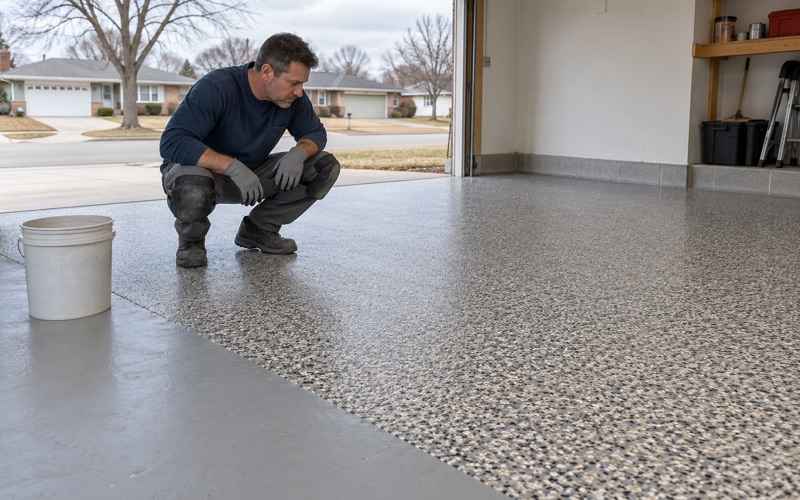
Houses built in the 1990s and 2000s make up 60.3 percent of Lake Villa’s housing, so many garage slabs here have been in service for decades. They carry years of road salt, oil drips and sealers that a homeowner may not remember applying.
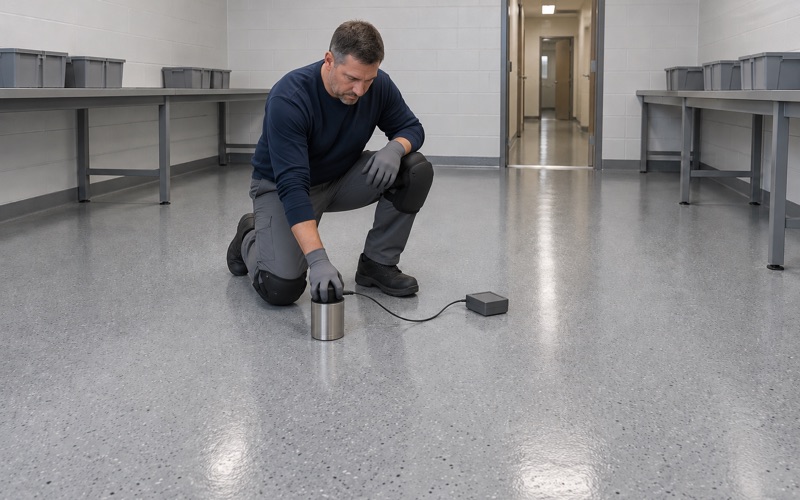
We grind off old sealers rather than coating over them and read every crack before quoting. Moisture testing is in the scope, using ASTM F1869 calcium chloride kits or ASTM F2170 in-situ relative humidity probes. A slab that looks dry can still push enough vapor to blister a film, and a test settles the question before we coat.
What the village permit list says
The Village of Lake Villa’s common-permits list puts concrete slabs, sidewalks, patios and stoops among work that needs no permit, along with hardwood and tile flooring. A new or resurfaced driveway does need one. The village runs the 2018 International Residential Code with local amendments, and anything not on the list is a call to the Building Department.
One result is that a replacement garage slab poured here may have no village inspection record of its base. When we find a newer slab, we test it rather than assume what is underneath. The village also does not register contractors, so we put the products, system and thickness in writing for you to check.
Getting a Lake Villa Quote
A useful quote starts with the floor itself, not a square-foot price read over the phone. Seeing the slab in person is how we learn what the finished floor will actually need.
What we look at first
We walk the slab and note cracks, joints, old coatings, drains and any low spots where water sits. If a slab needs repair or replacement before it can be coated, we say so before quoting a coating. For a warehouse, we also ask where racks, labels and lanes will go and who is doing that work.
Moisture comes next, because it is the first exclusion we name on any warranty. We read the exclusions out before the job is sold, so nobody learns about them after a blister appears.
What the proposal names
Our written proposal names the product, the system build and the finished thickness, so you can check what was quoted against what went down. Home jobs get a written contract before any deposit, with the products and any warranty written into it. Commercial jobs get the same detail plus the cure and marking schedule.
That paper trail helps the labeling or striping crew too. They know what topcoat they are applying to and when it reached the cure point we set.
Illinois rules on the coating itself
Lake Villa is on the Illinois side of the line, and Lake County sits inside the Chicago 2015 ozone nonattainment area. Illinois limits floor coatings to 250 grams per liter of VOC under 35 Ill. Adm. Code Part 223, and that limit binds the applicator.
We choose products for Lake Villa jobs with that ceiling in mind, which is one more reason 100% solids systems suit work here. Illinois does not license flooring or coatings contractors, so the proposal and the products named in it are what you hold us to.
- 20+ Years on Concrete
- Moisture Tested First
- Written System Proposals