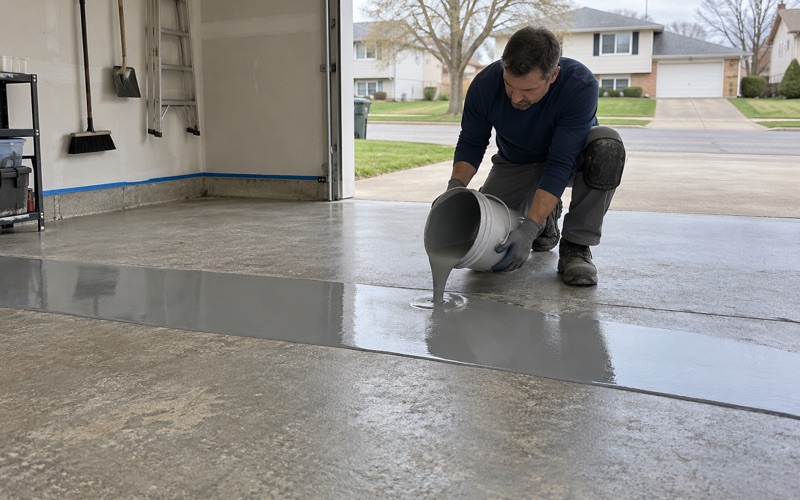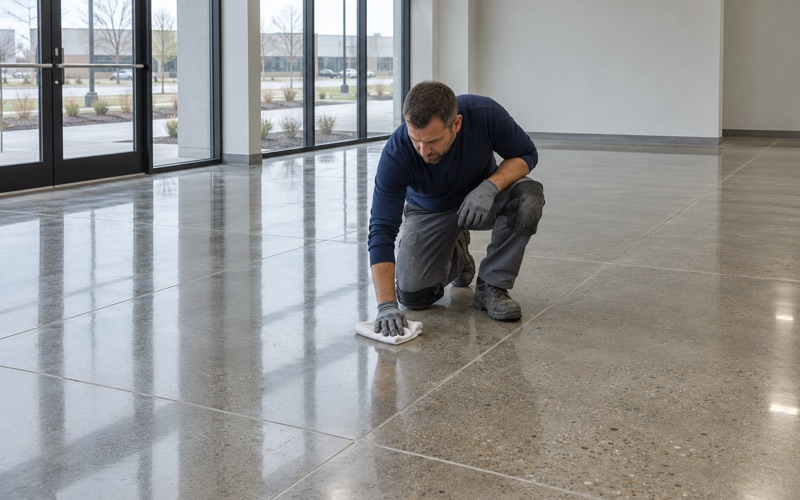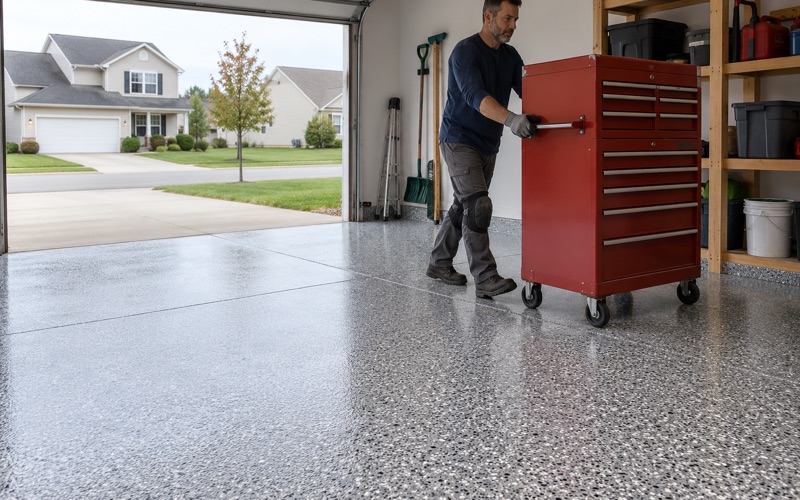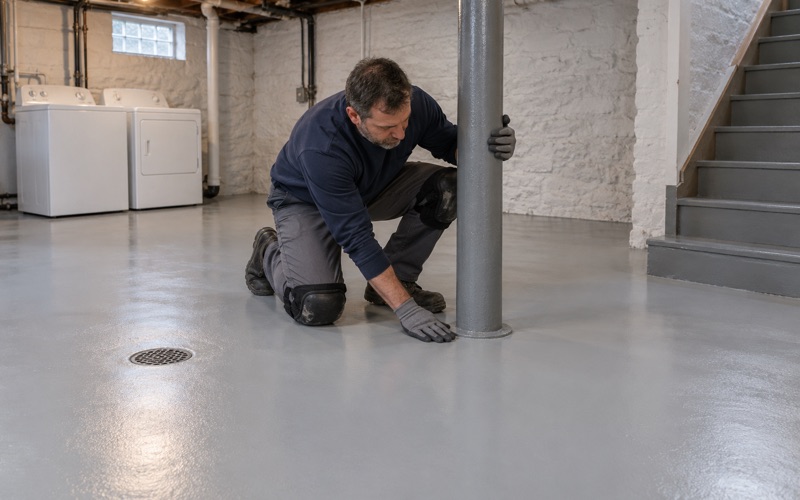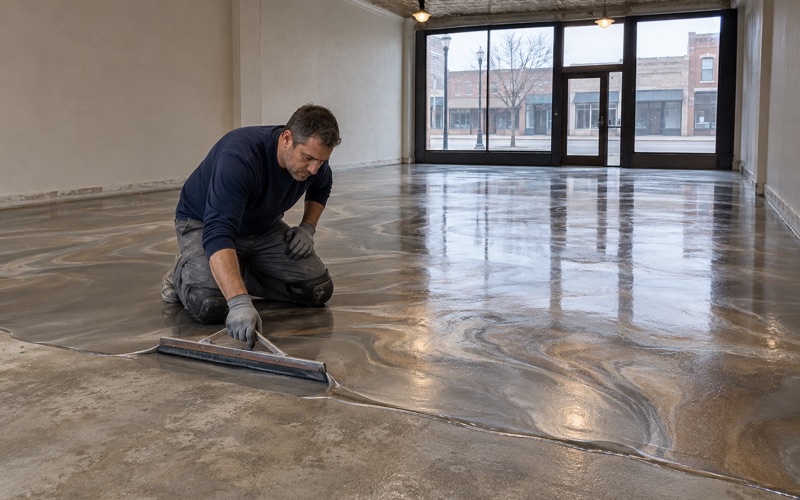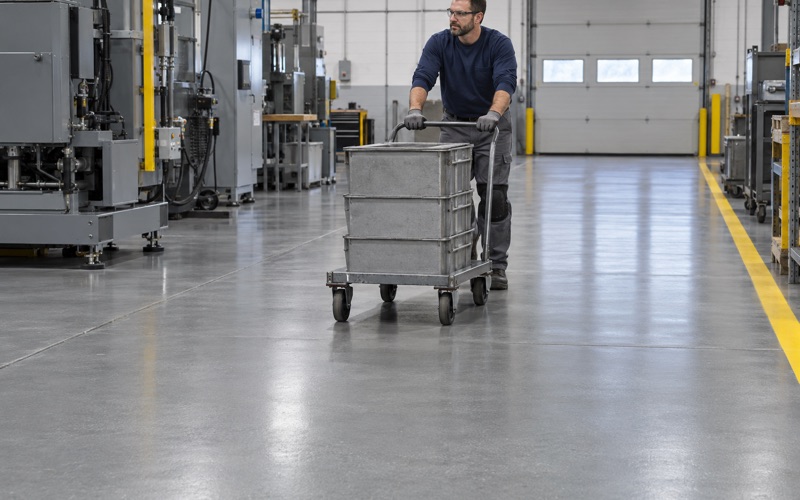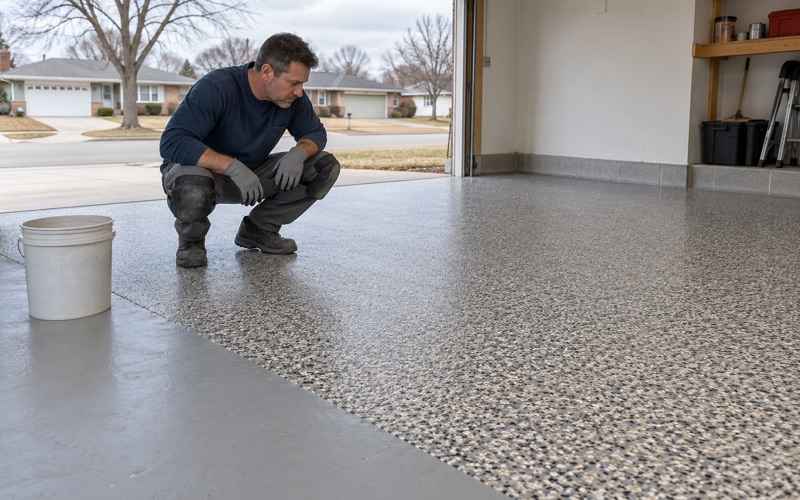
Kenosha Epoxy Flooring brings more than 20 years of epoxy-flooring work to Grayslake, and the jobs we take here tend to share one demand: the floor has to carry something that rolls. That might be a pickup in a garage, a project car in a shop bay or a trailer backed through an overhead door. We build each system around what will drive onto it, not around a color chart.
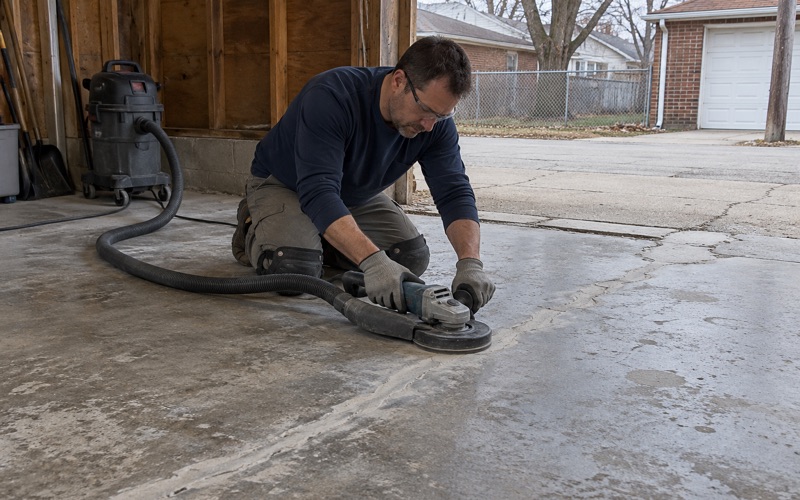
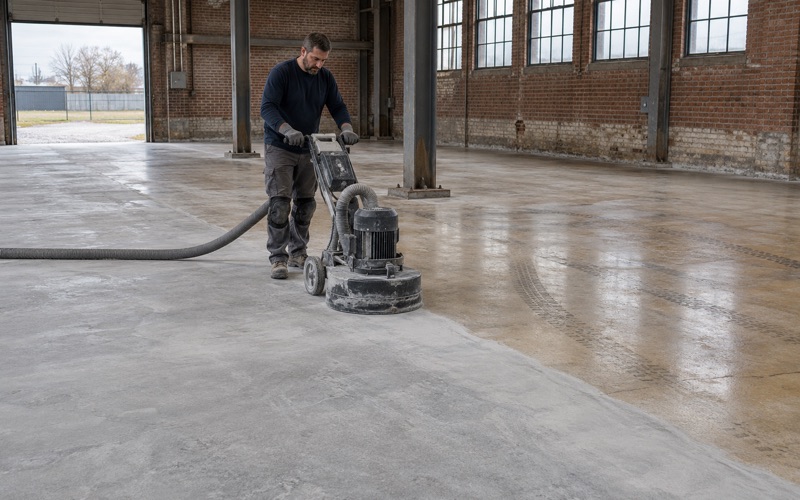
Every slab gets opened with a diamond grinder or a shot blaster before any coating touches it, and we never acid etch. Moisture testing is written into the scope as its own line, because a dry-looking slab is not proof of a dry one. The proposal then names the product, the system build and the finished thickness, so you can hold what went down against what was quoted.
Grayslake sits on the Illinois side of the state line, and that changes what we are allowed to put down. Illinois caps the VOC content of a floor coating at 250 grams per liter under Part 223 of the Illinois Administrative Code, and that limit binds the installer, not just the manufacturer. We select products for Grayslake jobs with the rule in hand before anything is ordered.
What a Drive-In Show Hall Asks of a Floor
The clearest local example of a floor under rolling load is the Lake County Fairgrounds Expo Hall on East Peterson Road. It is a 65,000-square-foot hall with three drive-in overhead doors, marketed as the place to display large vehicles, watercraft and industrial equipment. The venue does not say what its floor is made of, but its rules show what any drive-in floor has to plan for.
Weight Declared Before It Rolls In
Outside exhibitors at the Expo Hall must request approval for their equipment at least 30 days ahead. The request carries the dimensions, the weight, the power needs and a diagram of where everything will sit. That is a venue asking for the load and the layout before a single tire crosses the threshold.
We ask the same questions before we quote a showroom, a shop or a garage that will hold a boat or an RV. Knowing the heaviest wheel load and where it parks tells us how thick the build needs to be and whether a quartz aggregate broadcast belongs in the wear lanes. A floor specified without those numbers is only a guess.
Overhead Doors and the Threshold
A drive-in door funnels traffic into one strip of slab, and that strip takes every turn, every stop and every load of slush tracked in from outside. The joints and edges near a door are where a coating usually fails first. We fill control joints with a semirigid filler before coating, so wheels roll across a supported edge instead of breaking it.
Open doors also let in cold air and humidity, which matters while a coating cures. We schedule application against slab temperature and the dew point spread at the surface rather than the date on the calendar. When an unheated space cannot hold those conditions, we say so and wait for weather that can.
Reading the Slab First
Before any of this, we look closely at the cracks, the joints and any old coating already on the floor. A coating is a film that follows the slab beneath it, so it will not stop a moving crack from showing through. If a slab needs repair or replacement before it can carry a coating, the quote says that plainly.
Looking for epoxy-flooring closer to North Chicago? See Epoxy-Flooring Services in North Chicago.
Tire Marks, Drips and Hot-Tire Pickup
A floor with vehicles rolling in and out sees wear that a static display never does. Tires leave rubber, turning wheels scuff the surface, and parked engines drip. Each of those points to a different choice in the system build.
Hot-Tire Pickup
Hot-tire pickup happens when warm tires soften a coating and then pull it loose as they cool and grip. Thin, single-coat products are the usual victims, especially in garages where a car pulls in straight off a highway drive. A 100% solids epoxy base under a polyaspartic or polyurea topcoat holds up far better than a one-day film.
Surface preparation matters as much as the product does. A ground slab with a measured ICRI CSP profile gives the base coat something to bite into, and that bond is what keeps a tire from lifting it. We do not substitute acid etching for that step on any job, residential or commercial.
Turning Scuff and Rubber Marks
Tires that turn in place grind rubber into the surface and leave black arcs behind. A harder topcoat resists the abrasion, and a vinyl flake or quartz broadcast adds texture that hides light marking between cleanings. On a showroom floor where appearance sells the product, we talk through gloss level too, since high gloss shows every scuff.
Fluid Drips and Cleanup
Oil, coolant and brake fluid all reach the floor sooner or later under a parked vehicle. A sealed, seamless coating keeps them on top where they can be wiped up, instead of soaking into bare concrete. The fairgrounds rules show why cleanup counts: a promoter there is financially responsible for any damage and pays $100 per hour when extensive cleaning is needed.
The same logic runs through automotive training spaces. The College of Lake County Grayslake campus at 19351 W. Washington Street houses automotive technology and collision repair programs, the kind of setting where fluids, jacks and rolling tool carts work a floor every day. Shops like that want a broadcast texture for footing and a topcoat that stands up to solvents and spills.
Marking and Taping a Coated Floor
The Expo Hall rules require prior approval before anything is attached to the floor with nails, staples or tape. A rule like that exists because adhesive and fasteners damage surfaces, and a coated floor is no exception. Booth layouts, parking stripes and safety lanes all need a plan that fits the coating under them.
Why Tape Needs Approval
Strong tape left on a floor can lift a topcoat when it is pulled, especially on a coating that has not fully cured. Residue also traps dirt and leaves a ghost outline of last week’s layout. A venue that approves tape in advance is protecting its floor from exactly those problems.
If you run a showroom or event space on a coated floor, we tell you how long to wait before any tape goes down. Full chemical cure takes longer than walk-on time, and both depend on temperature. We give you those numbers for the specific product we install, and we put them in writing.
Permanent Lines and Booth Grids
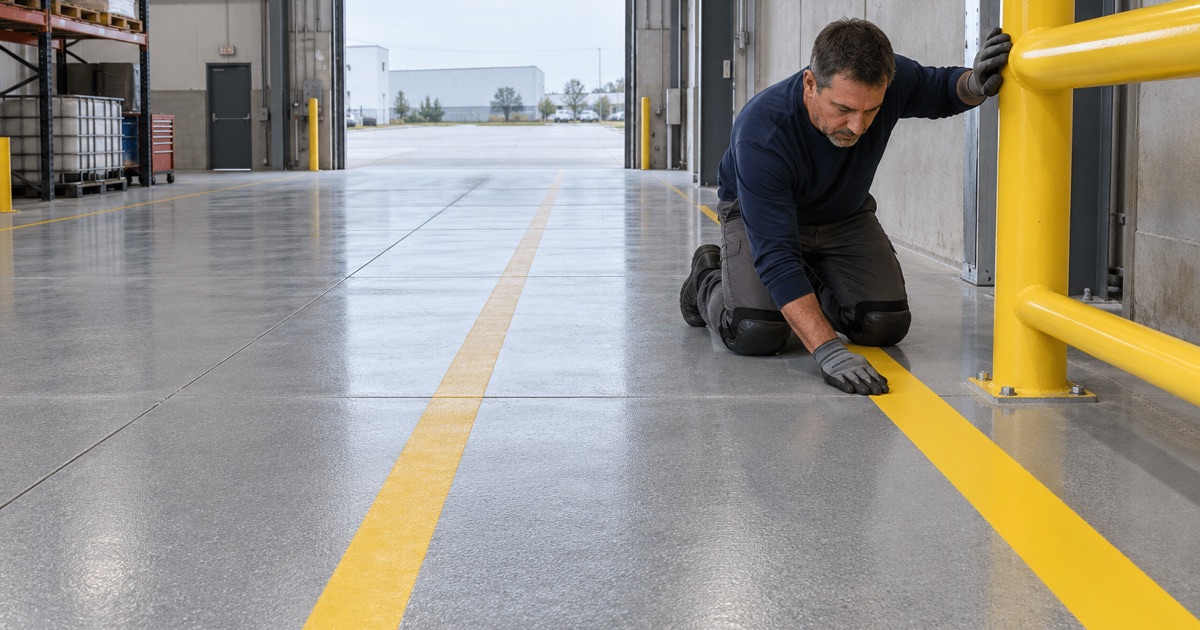
For layouts that repeat week after week, coated lines beat tape. We can build aisle markings, parking stalls and safety lanes into the system so they sit under the topcoat instead of on top of it. That keeps the marking from peeling and gives a dolly or a pallet jack nothing to catch on.
Dust and Slurry Stay on Site
Grinding a floor for a new layout makes dust and slurry. We collect both on site with vacuum equipment and never wash them toward a street drain or a storm inlet. Lake County is classified as Serious nonattainment for the Chicago 2015 ozone standard, so low-VOC product choice and clean site practice both carry weight here.
Grayslake Garages, Townhouses and Permits
Away from the fairgrounds, most of our Grayslake work is residential. The village’s housing stock is young, with homes built in the 1990s making up 41.5 percent of units and the 2000s adding another 20.4 percent.
1990s and 2000s Garage Slabs
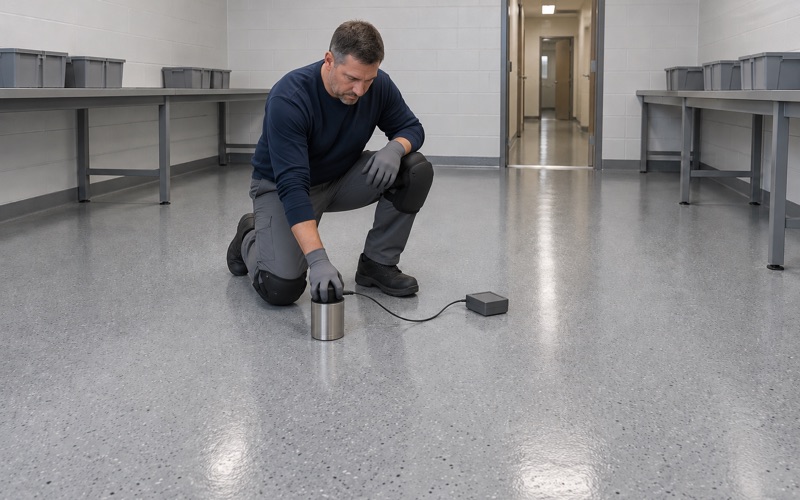
A garage slab from that era is usually sound but rarely bare. Many carry a sealer, paint or an old coating that has to come off before anything new will bond. We grind through it, then run moisture testing such as ASTM F1869 calcium chloride or ASTM F2170 relative humidity probes before choosing a primer.
Winter is the other factor in a Lake County garage. Road salt and calcium chloride brine ride in on tires and sit on the slab for months, so a garage system needs a topcoat that resists deicers. Warranty exclusions get read out before you sign, and moisture is the first one we name.
Townhouses and Association Rules
Townhouse-style attached homes make up 20.1 percent of Grayslake’s housing units, and most are owner occupied. Associations can set rules stricter than the village’s own, including rules on garages. If your association limits contractor hours, parking or exterior work, we plan the job around those terms.
Attached garages share walls, and grinding is loud. We contain dust with shrouded grinders and vacuum collection, and we tell you which days will be noisy so you can let neighbors know. Every home job also gets a written contract before any deposit, listing the products and any warranty.
Permits and Who Inspects
Grayslake’s village FAQ says almost every building or property change needs a permit, from patios and driveways to interior alterations. Flooring is not named in that list, so we confirm with the Department of Building and Zoning at 10 S. Seymour Avenue whether a given job needs one. The village does not register contractors, and Illinois issues no license for coating work.
One exception is worth knowing. In the Prairie Crossing subdivision, Lake County rather than the village handles plan review and inspections under its own adopted codes. We check which office applies to your address before the job goes on the calendar.
- 20+ Years on Concrete
- Moisture Tested First
- Written System Proposals