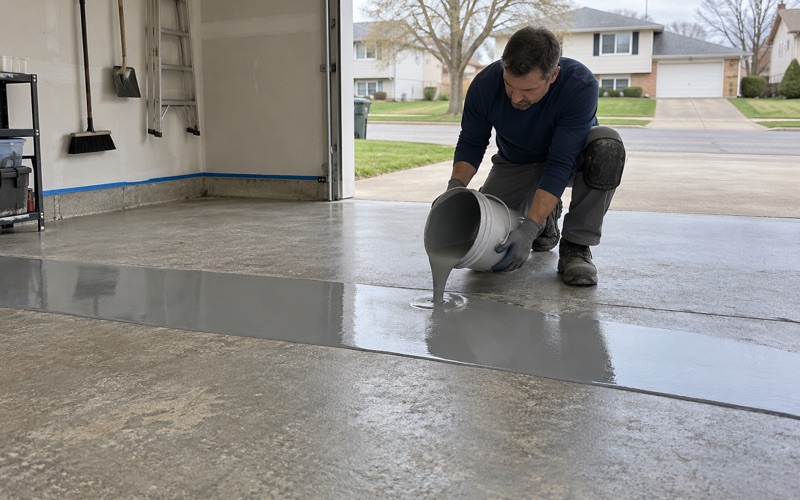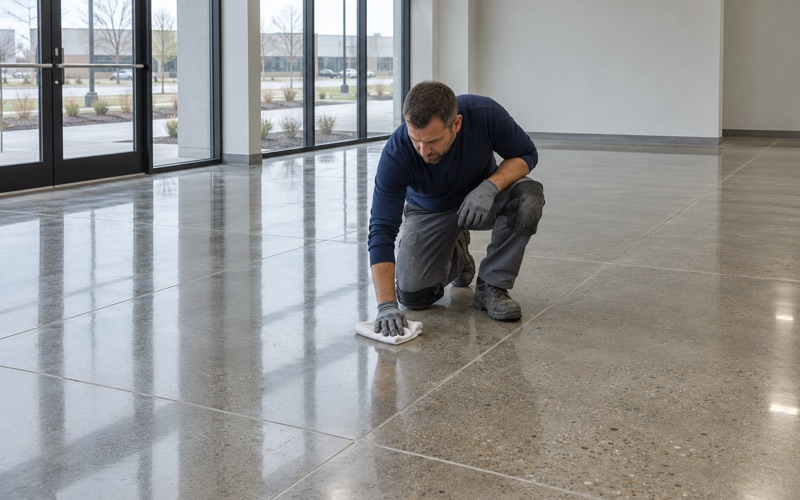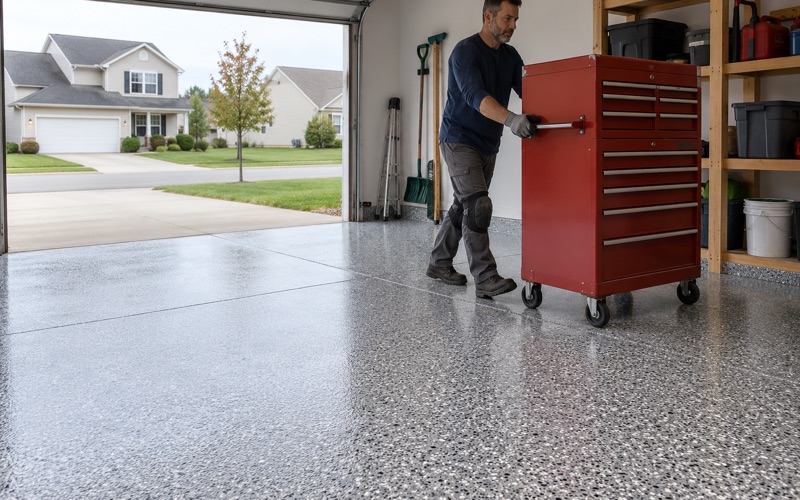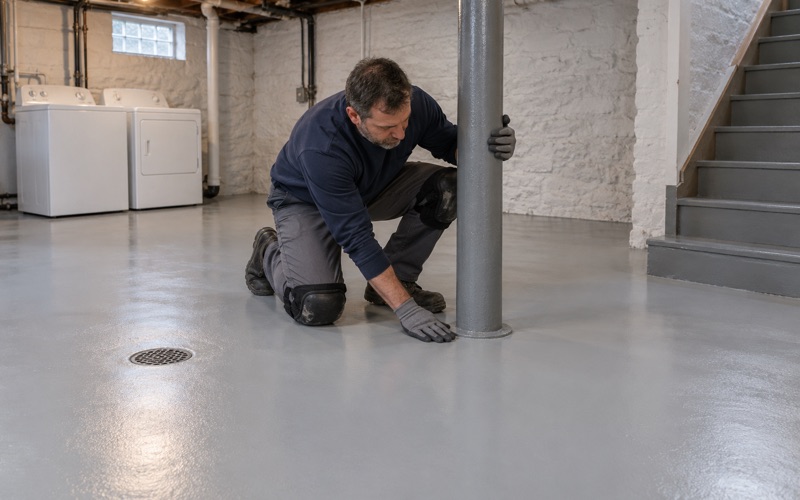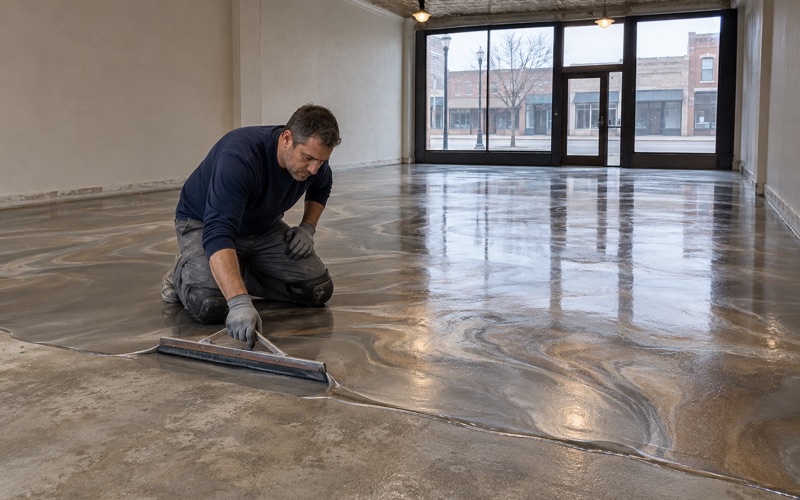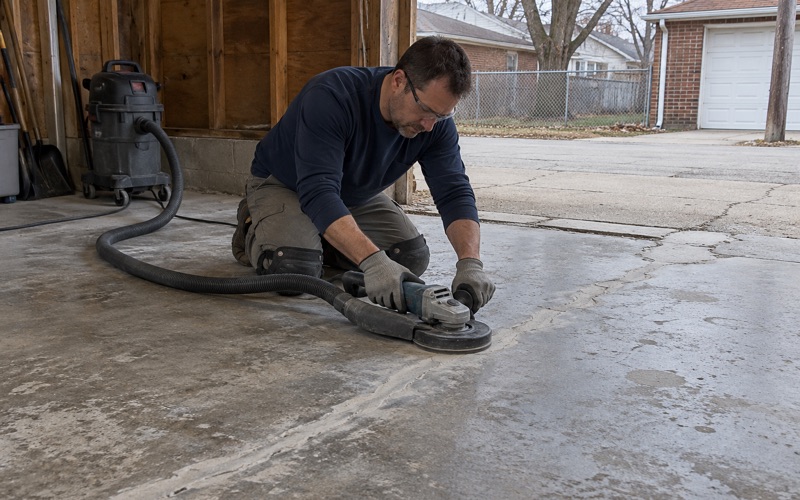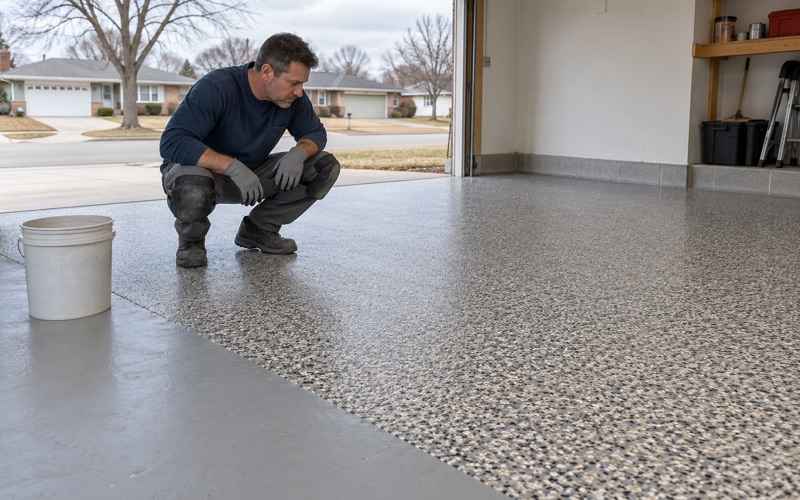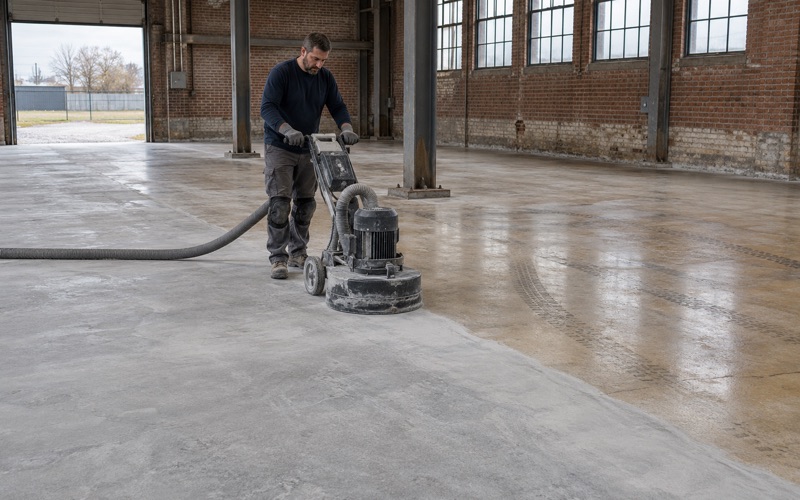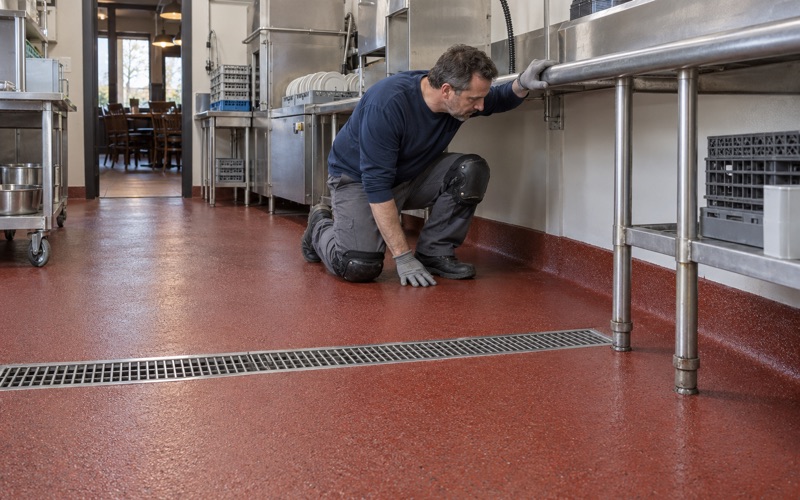
Kenosha Epoxy Flooring has put 20+ years into concrete coatings, and our work on epoxy flooring in Fox Lake starts the way every job does: with the slab, not the color chart. We open every floor mechanically with a diamond grinder or a shot blaster, and we do not acid etch. That cut leaves an ICRI CSP profile the primer can actually grip, which matters most on commercial floors that carry crowds.
Before a price goes on paper, we walk the floor and read the cracks, the joints and whatever coating is already there. When a slab needs repair or replacement before it can hold a coating, we say so plainly instead of burying it in the fine print. The proposal then names the product, the system build and the finished thickness, so an owner can check what was quoted against what went down.
Much of what follows is about floors where people walk in the dark or carry full drinks, because that is where a coating decision in this village gets specific. A stepped theater aisle, a concession counter and a public gym each ask something different of a finish. We cover what each one needs, what the adopted building code says, and where epoxy is simply the wrong answer.
A Fox Lake Multiplex Since 1995, Expanded Again in 2024
Classic Cinemas on Towne Centre Lane
Classic Cinemas Fox Lake sits at 115 Towne Centre Lane in Lakeland Plaza, inside the village and within Grant Township. The family-owned chain has served Fox Lake since the theater opened on August 4, 1995, and it added screens in 2004. That makes it one of the few assembly buildings in a village of 10,978 people where moviegoers move across stepped floors in low light.
In June 2024 the theater added four auditoriums, two of them in the premium XQ format, and reopened its doors at 5 p.m. on June 12 with a ribbon cutting. The chain describes its remodeled rooms as stadium-style auditoriums. It also said more enhancements were planned, including a refreshed lobby with a new entrance.
Recliner Rooms and the Aisles Beside Them
The new rooms carry plush power heated recliners, and recliner seating generally needs deeper rows than fixed seats do. In a stadium room, that turns the aisle beside the seats into a run of long treads and short steps. Guests climb those steps with food in hand after the lights drop, which is exactly where a floor finish either helps them see the edge or hides it.
We are writing about this building as a type, not as a customer. We have not read the theater’s existing aisle finishes or stripes, and nothing here describes work done there. What we can describe is how any stadium-style auditorium in Fox Lake gets coated or recoated without losing what the code expects at each step.
What a Theater Floor Asks of a Coating
An auditorium floor is a mix of surfaces: flat cross aisles, stepped aisles, seating platforms and transitions at every door. Each one takes foot traffic, dropped popcorn and spilled soda, and most of it gets cleaned between shows rather than on a weekly schedule. A coating there has to bond hardest at the edges, where traffic turns and cleaning equipment bumps the nosing.
For that kind of floor we build a 100% solids epoxy body coat and finish it with a polyaspartic or polyurea topcoat where abrasion runs heavy. A fine quartz aggregate broadcast gives a tread grip without turning it into sandpaper. The exact build depends on the substrate we find once the old finish is opened up, and the proposal says which build we chose and why.
Looking for epoxy-flooring closer to Round Lake? See Epoxy-Flooring in Round Lake.
A Stripe at Every Nosing: What the Code Asks of a Stepped Aisle
The Rule Behind the Stripe
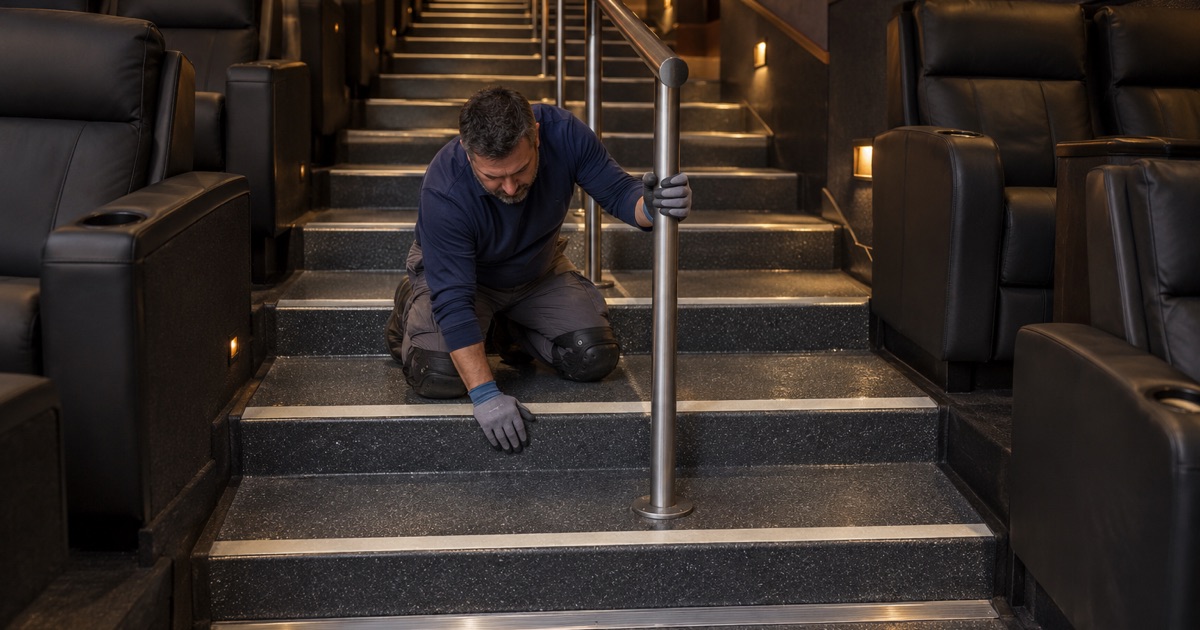
Fox Lake adopted the 2015 International Building Code, along with the companion residential, fire and property maintenance codes. In the 2015 numbering, section 1029.13.2.3 covers stepped aisles in assembly seating and calls for a contrasting stripe at each tread nosing or leading edge. The purpose is that the location of every tread is readily apparent to someone looking down the aisle while descending.
The stripe must be at least 1 inch and no more than 2 inches wide. There is one exception: the stripe may be omitted where the tread surfaces themselves make each tread apparent when viewed in descent. We read that language through the California Building Code, which is based on the 2015 IBC, and the same rule sits at 1028.11.3 in the 2012 edition and 1030.14.2.3 in the 2024 edition.
Whose Rule It Is
The stripe requirement belongs to the building, not to whoever applies the coating. The theater owner, its design professional and the Village of Fox Lake Community Development Department on Thillen Drive are the ones who settle what an auditorium needs. Our part is making sure a coating job does not quietly erase something the building already relies on.
That is why we ask about the stripes before we quote a stepped aisle, not after the first coat is down. If the existing stripe is a painted line, an inlay or a contrasting broadcast inside the coating, the recoat has to account for it. Whether a coating alone needs a permit is the Community Development Department’s call, and we confirm it before the job is scheduled.
Why a Uniform Dark Finish Can Be the Wrong One
Charcoal and black finishes are popular in auditoriums because they hide stains and keep stray light off the screen. The trouble is that one dark color running over tread and riser alike makes every step look like the one before it. In a dimmed room, that is the exact condition the stripe rule is written against.
Leaning on the exception means the tread surface itself has to make each edge obvious, which a uniform coat rarely does. A finish that relies on a subtle texture change may look fine under work lights and vanish once the show starts. We would rather carry a defined stripe at the nosing than argue that a monochrome floor explains itself.
Carrying or Restoring the Stripe in a Recoat
A recoat on a stepped aisle is planned tread by tread. We grind the existing finish back to a sound profile, rebuild any chipped nosings with an epoxy repair mortar, and then lay the field color. The contrasting stripe goes on as its own coat at the leading edge, sized to stay between 1 and 2 inches.
Stripe color is chosen for contrast against the field in low light, not to match a brand palette. A light stripe on a dark tread, sealed under the same clear topcoat as the field, wears with the floor instead of peeling away like tape. When the job is done, the stripe should read clearly from the top of the aisle looking down, which is the view the code describes.
Lobby and Concession Floors That Get Mopped All Night
Soda, Butter and Popcorn
A theater lobby takes a different kind of abuse than an auditorium. Syrup from the soda fountain dries sticky, butter topping leaves an oily film, and popcorn gets ground into the floor under a steady line of shoes. The coating has to shed all three without staining and without turning slick when the mop comes through.
Oil is the hardest of the three. Butter that sits on a worn or porous finish can soak in and darken it, so the topcoat has to be tight and fully cured before the counter opens. We favor a chemical-resistant polyaspartic topcoat over the epoxy body, because it holds up better to the daily degreasing a concession floor needs.
Texture That Still Cleans
Slip resistance and cleanability pull in opposite directions. Heavy aggregate gives traction but traps butter and syrup in its valleys, while a smooth finish cleans easily and gets slippery when wet. For lobbies we usually broadcast a fine quartz aggregate and back-roll the topcoat over it, so the texture is there underfoot but the surface still releases dirt under a mop.
Vinyl flake broadcast is another option for public areas, since the flakes hide small stains and blend wear between recoats. Behind the counter, where floors see hot water and constant wet cleaning, we look at urethane cement instead of a thin film. Each zone can carry a different system as long as the transitions are detailed flush so nobody trips on them.
Working Around Show Times
A movie house does not close for a week to have its floors done. Lobby and concession work gets scheduled in overnight and early-morning windows, section by section, so the building keeps running. We plan the order of work so guests are never routed across a floor that is still curing.
Curing runs against slab temperature and the dew point spread at the slab surface, not the calendar. Too little spread and epoxy can develop amine blush, a waxy film that keeps the next coat from bonding. We measure before each coat, and if the numbers are wrong, the coat waits rather than going down and failing later.
Village Recreation Floors: The Lakefront Park Building
A Building With Many Uses
Lakefront Park at 10 Riverview Avenue is the village’s own recreation building, renovated with a dance studio, modern meeting rooms and indoor pickleball courts. Its main gym also hosts the village’s Indoor Walking Program on Thursday afternoons and Friday mornings. During the expansion, the village opened amenities one at a time as each was finished, rather than keeping the whole park closed.
That pattern matters for anyone planning floor work in a public building like this one. A recreation space rarely shuts down entirely, so coating work has to move room by room around its programs. We have not read the floor materials in that building, so we describe the choices involved rather than its current floors.
Where Epoxy Fits and Where It Does Not
A dance studio and a pickleball court want very different things from a floor than a lobby does. Sport and dance surfaces are typically specified for give, ball response and court lines, and a hard resinous coating over concrete is often the wrong tool there. We say that plainly rather than selling a coating into a room that needs another kind of floor.
In a building like this, epoxy earns its place in supporting rooms such as restrooms, storage and mechanical spaces, and in corridors that carry wet shoes in from a sand beach and splash pad. Those floors take water, grit and cleaning chemicals every day. A moisture-tolerant system with a textured topcoat and coved edges at the walls keeps them easy to clean.
Testing and Paperwork Before a Quote
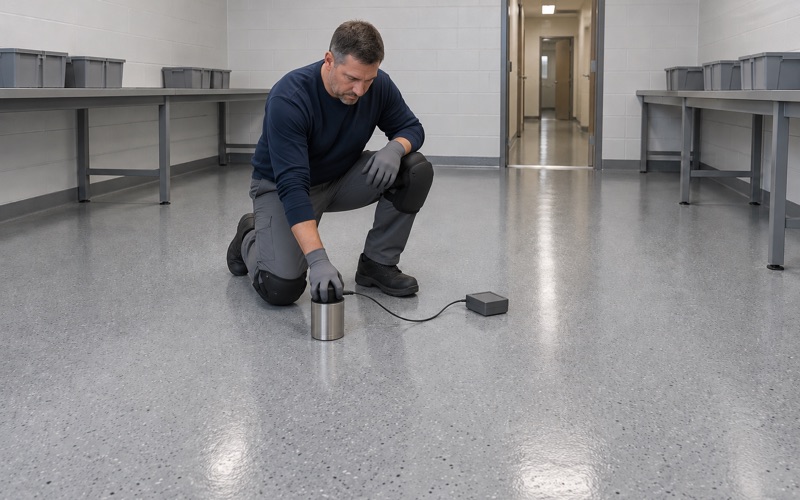
Every commercial job gets moisture testing as a line item in the scope. We use ASTM F2170 in-situ relative humidity probes or ASTM F1869 calcium chloride tests and compare the results to the coating maker’s limits before choosing a primer. When readings run high, a moisture-mitigation primer goes into the proposal, and warranty exclusions are read out with moisture named first.
Fox Lake sits on the Illinois side of the state line, where 35 Ill. Adm. Code Part 223 limits the VOC content of the architectural coatings an installer may apply. We pick products that meet those limits for Illinois work, and the proposal names each one. Grinding dust and slurry are collected on site and kept out of street drains, which matters in a village that borders three lakes.
- 20+ Years on Concrete
- Moisture Tested First
- Written System Proposals