Kenosha Epoxy Flooring installs flake epoxy floors in Kenosha, WI, serving surrounding cities including Somers, Pleasant Prairie, Bristol, Sturtevant and Winthrop Harbor. After 20+ years of coating garages, basements and shops, the full-broadcast flake floor is the system we install most often, because it handles the realities of a Kenosha winter better than any finish that relies on looks alone.
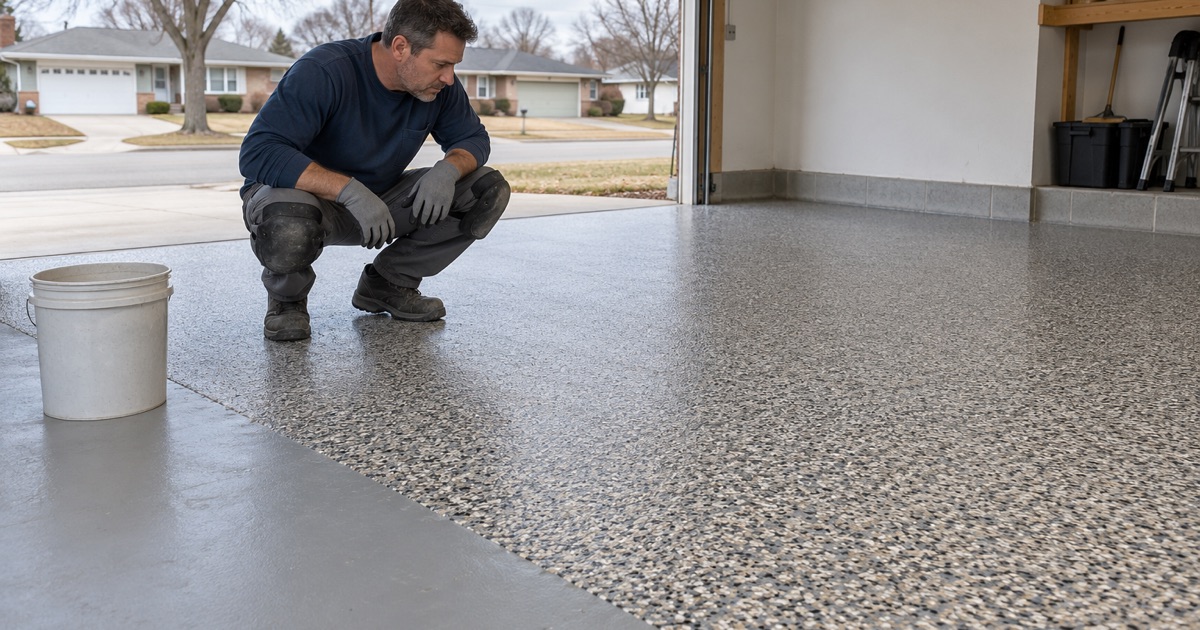
A flake floor is built in layers: a ground and repaired slab, an epoxy base coat, vinyl flake broadcast into the wet base, and a clear topcoat that locks the chips in. The flake hides dust, tire marks and small imperfections, adds texture underfoot and makes damaged spots easy to repair.
The proposal names the base, the flake blend and size, the topcoat and the finished thickness, so you can check the floor against what was quoted. Moisture testing is written into the scope before any coating is chosen.
Choosing a Flake Blend
Flake Size and Pattern
Vinyl flake comes in sizes from fine chips to large ones about the size of a fingernail. Fine chips give a uniform speckle that reads almost like granite. Larger chips create a bolder pattern with more visible individual flakes, closer to terrazzo.
The size also affects texture and cleaning. Larger chips can leave a slightly rougher surface under a light topcoat, while fine chips produce a smoother floor. We help you match the size to how the space is used.
Color Blends and Base Colors
Flake is sold in blends of several colors mixed together, from grays and tans to blends with brighter accents. Grays and earth tones hide salt residue and dirt best in a garage. Lighter blends brighten a basement or shop.
In a full broadcast, the base color is hidden, so it matters less. In a partial broadcast, the base shows between chips and becomes part of the design, which opens up more color choices.
Partial Versus Full Broadcast
A partial broadcast scatters chips over a solid color and gives a lighter, more open look. A full broadcast covers the base completely, adding more texture and hiding more. For garages and shops that see salt, tires and tools, full broadcast is the more durable and forgiving choice.
Building a Flake Epoxy Floor
Grinding and Repairs First
Every flake floor starts with a diamond grinder or shot blaster, never acid. Grinding removes the weak surface layer, old sealers and paint and opens the concrete to a profile the base coat can grip. Cracks, spalls and pits are filled and ground flush so the finished floor is level.
When we see a crack that is still moving or a slab that has heaved, we say so before quoting. A coating follows the concrete under it and cannot hold a moving slab together.
Base Coat and Broadcast
The epoxy base coat goes down at a measured rate, and the flake is broadcast into it while it is still wet. In a full broadcast we keep throwing flake until the surface will not accept any more. Once the base cures, the excess flake is scraped and vacuumed away, leaving an even layer of chips.
This stage is sensitive to temperature and humidity. We read slab temperature and the dew point spread at the surface before mixing, because a base coat applied in poor conditions can blush and weaken the bond between layers.
Clear Topcoat
The clear topcoat seals the flake and carries the wear. In garages we usually use a polyaspartic or polyurea topcoat, which resists hot tire pickup and does not amber in sunlight. The thickness of the topcoat controls how smooth or textured the floor feels.
We agree on that texture before the job, often by showing finished samples with light and heavy topcoats. A smoother floor is easier to mop, while a little more texture near the door gives better footing when snowmelt comes off the car.
Flake Floors in Kenosha Garages and Basements
Built for Salt and Brine
Rock salt and calcium chloride brine ride into every garage on the tires. On bare concrete that brine soaks in and scales the surface. On a flake floor it stays on top, where it can be squeegeed out and rinsed off, and the pattern hides much of the white residue between cleanings.
Garage Slabs Without a Vapor Retarder
Wisconsin’s dwelling code does not require a vapor retarder under an unconditioned attached garage slab, so many garage floors sit directly on fill. We test before coating, using calcium chloride kits or relative humidity probes, and choose a moisture-mitigation primer when the readings call for it.
A flake floor that blisters from vapor is a costly repair. Testing first is how we avoid it, and why the warranty exclusions we read out before the job begin with moisture.
Basements, Laundry Rooms and Shops
In basements, a flake floor brightens the space, hides the marks of storage and laundry use and wipes clean. In a workshop, it resists oil, dropped tools and rolling equipment. The same moisture testing and edge detailing at drains and sump pits apply before coating.
Living With a Flake Floor
Cleaning and Winter Care
Sweep or dust mop regularly and rinse salt off a few times through the winter. A mild cleaner and a soft mop or squeegee handle most dirt. Avoid harsh acids, which can dull the topcoat.
Repairs and Recoating
If a heavy tool chips the floor, the spot can be ground out, rebroadcast with the same blend and sealed, and the repair blends into the random pattern. When the topcoat wears thin in traffic paths after years of use, it can be abraded and recoated without starting over.
Contracts and Written Records
For home jobs, we provide a written contract before taking a deposit, as Wisconsin’s home improvement rule requires. It lists the flake blend, the coating products, the finished thickness and any warranty terms, which makes future repairs and color matching straightforward.
- 20+ Years on Concrete
- Moisture Tested First
- Written System Proposals