
Kenosha Epoxy Flooring handles concrete floor repair in Kenosha, WI, serving surrounding cities including Somers, Pleasant Prairie, Bristol, Sturtevant and Winthrop Harbor. After 20+ years of grinding and coating slabs, we have seen nearly every way a floor can fail, and most of our coating jobs begin with repair work long before any color goes down.
We read the cracks, joints, spalls and old patches before we quote anything. Some damage is cosmetic, some is a sign the slab is still moving, and a few floors are past saving. When a slab needs replacement rather than repair, we say so plainly instead of selling a patch that will fail.
Repairs are written into the proposal as their own line items, with the material named, so you can see what is being fixed and why. Grinding dust and repair slurry are collected on site and never washed toward a street drain or the lake.
Crack Repair for Concrete Floors
Hairline and Shrinkage Cracks
Almost every slab develops fine shrinkage cracks as it cures. They are usually stable and do not affect the floor’s strength. Before coating, we open them slightly with a grinder or crack chaser, clean them and fill them with a rigid repair material ground flush with the surface.
Leaving these cracks open under a coating is a common shortcut. The coating sags into them and the line shows through the finish, and dirt and water collect in the gap. Filling them takes little time and gives the finished floor a clean, continuous look.
Wider Cracks and Offset Edges
Cracks that have opened wider or have one side higher than the other show that the slab has moved. We grind offset edges flat to remove trip hazards and fill the crack with a material matched to the movement we expect. A coating will follow any further movement, so we explain honestly what the repair can and cannot hold.
We sometimes mark the ends of a crack and check it again before coating, especially in a basement or an older garage. A crack that has grown in the meantime is still active, and that changes both the repair material and our advice about the finish.
When Cracks Mean Replacement
A slab that has heaved from frost, sunk over poorly compacted fill or broken into loose sections cannot be held together by filler and coating. In those cases we recommend replacing the affected area before any finish goes down. That advice costs us a coating job today, and it saves you from paying for one that would fail.
Spalls, Pits and Surface Damage
Salt Scaling Near Garage Doors
Kenosha winters bring rock salt and calcium chloride brine into garages on every set of tires. On bare concrete, that brine soaks in and freeze-thaw cycles pop off the surface in flakes, usually worst near the door and in tire paths. We grind away the weak layer and rebuild the surface with a polymer repair mortar.
Once scaled concrete is repaired, the best defense is keeping salt off it. A coated floor keeps brine on the surface where it can be squeegeed away instead of soaking in, which is why we usually recommend coating a garage after scaling repair.
Spalled Joints and Broken Edges
Control joints and slab edges take hits from tires, forklifts and dropped loads. Once an edge chips, each impact breaks off more. We cut back the damaged concrete to sound material, rebuild the edge with a fast-setting repair mortar and, in commercial floors, fill the joint so wheels roll across it rather than into it.
Pits, Pop-Outs and Old Anchor Holes
Pop-outs from expanding aggregate, pits from old equipment and holes from removed anchors all need filling before a floor can be coated smoothly. We fill them with repair material and grind it flush so the finished floor does not show dimples under a gloss topcoat.
In shops and plants, old anchor holes often sit where new equipment will go. We coordinate repairs with your layout so new anchors land in sound concrete, and we seal around them after installation so oil and coolant do not work under the floor.
Joint Repair and Joint Filling
Semirigid Joint Filler for Forklift Traffic
In warehouses and plants, saw-cut joints carry forklift and pallet-jack wheels all day. Industry guidance calls for a semirigid epoxy or polyurea filler to support the joint edges. We fill joints before any coating goes over them, because a coating bridged over an open joint fails at the joint first.
Expansion Joints and Isolation Joints
Not every joint should be filled solid. Isolation joints around columns and walls and true expansion joints need a flexible sealant that allows movement. We identify which joints are which so the repair matches the job each joint does.
Filling a true expansion joint with rigid material transfers movement into the slab and causes new cracks nearby. Leaving a forklift joint with only a soft caulk lets the edges spall. Getting the filler right for each joint is a small decision with a long life.
Preparing Repaired Floors for Coating
Grinding Repairs Flush
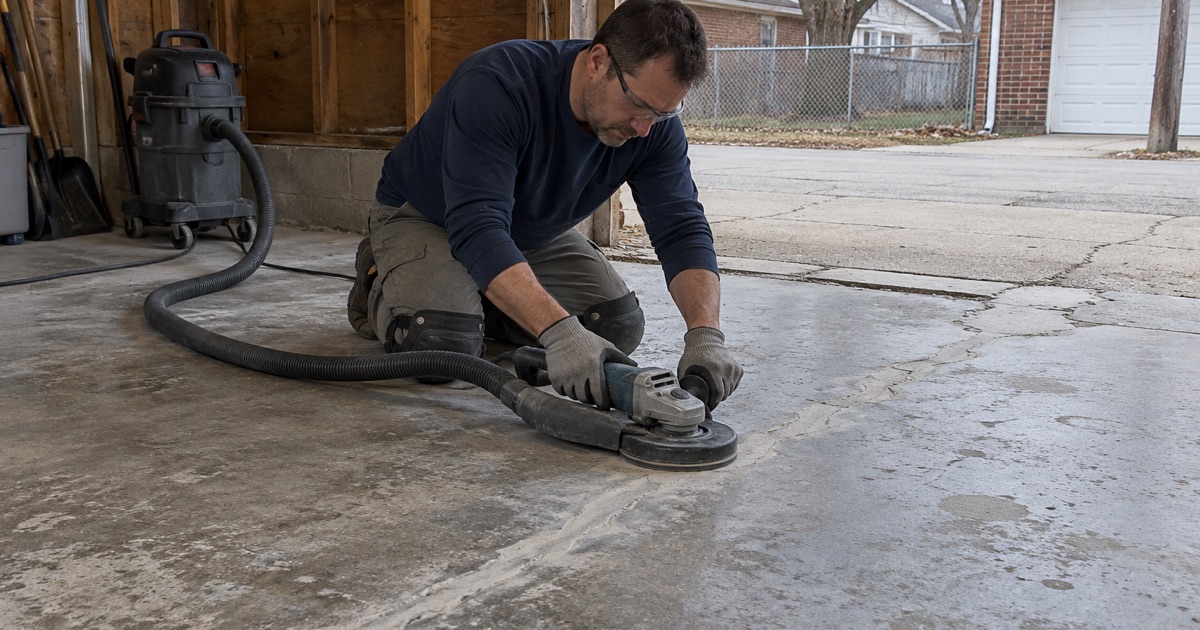
Every repair is ground flush with the surrounding slab so the coating lies flat. We open the whole floor with a diamond grinder or shot blaster at the same time, which gives the coating a consistent surface profile across both old concrete and new repair material.
Moisture Testing After Repairs
A repaired slab still needs moisture testing before it is coated. Repairs do not change what is coming up from below, and in basements or garages without a vapor retarder, the reading decides which primer we use. Testing is a written line item, not an afterthought.
Old Coatings and Failed Patches
Failed coatings and crumbling patches from earlier work must come out before new repairs can bond. We grind them away and rebuild with materials compatible with the coating system planned for the floor, so the repair and the finish work together rather than against each other.
When the floor is a home garage or basement, the repairs and coating go into one written contract before any deposit is taken, as Wisconsin’s home improvement rule requires. The contract names the repair materials as well as the coating, so you have a record of everything that went into the floor.
- 20+ Years on Concrete
- Moisture Tested First
- Written System Proposals