
Kenosha Epoxy Flooring installs basement floor epoxy in Kenosha, WI, serving surrounding cities including Somers, Pleasant Prairie, Bristol, Sturtevant and Winthrop Harbor. Over 20+ years of coating basement slabs, we have learned that the first question is never the color. It is how much moisture the concrete is moving, because a basement floor sits in the ground and the ground is rarely dry.
That is why moisture testing is a written line item in every basement scope we send, not an upsell offered after a floor blisters. The reading decides the primer, the system and sometimes whether the floor should be coated at all yet. When a basement needs a drainage fix or slab repair before it can hold a coating, we say so plainly.
Once the slab checks out, we grind it open, repair it and build a coating sized to how the room will be used, whether that is a laundry and storage area, a playroom, a home gym or a full living space. The written contract names every product, the system build and the finished thickness before any deposit is taken.
The Moisture Question Comes First
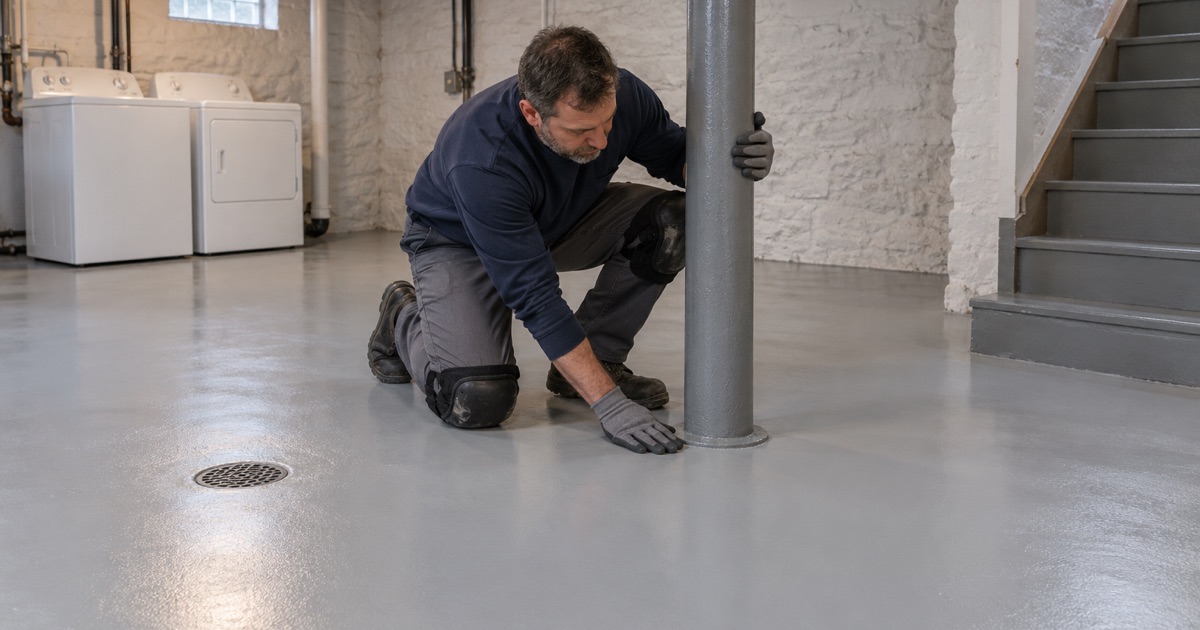
Testing a Basement Slab Before Coating
We use several tests depending on the floor. The ASTM D4263 plastic sheet test is a quick screen that shows whether moisture is collecting under a taped sheet. ASTM F1869 calcium chloride kits measure how much vapor the slab emits over a set time, and ASTM F2170 probes read relative humidity from inside the concrete.
The numbers matter because coatings have limits. A standard epoxy primer can handle a modest amount of vapor, while higher readings call for a moisture-mitigation primer. Writing the results into the scope means you can see exactly why we chose the system we did.
Hydrostatic Pressure and Why Dry Floors Fail
Water in the soil around a foundation can push up against the underside of the slab. That hydrostatic pressure drives moisture through concrete that looks and feels dry on top, especially after heavy rain or snowmelt. Months after coating, the vapor collects under the film and lifts it into blisters.
A basement that has never had standing water can still have this problem. That is why we test every slab instead of judging it by eye, and why our proposals read out the warranty exclusions before the job is sold, with moisture named first.
Efflorescence and What It Tells Us
The white, chalky powder on many basement floors is efflorescence: mineral salts carried through the concrete by water and left behind when it evaporates. It is a sign that moisture is moving through the slab, and it will push a coating off if it is simply painted over.
We grind efflorescence away, test the slab and look for the source. Sometimes it is a downspout or grading issue outside, sometimes a high water table. Understanding which helps decide whether a mitigation primer is enough or whether water management should come first.
Preparing a Basement Floor for Epoxy
Grinding Away Paint, Adhesive and Old Patches
Basement floors in older Kenosha homes often carry decades of history: paint, tile adhesive, leveling patches and earlier coatings. A new epoxy is only as strong as the layer beneath it, so all of that has to come off. We grind with dust-collecting vacuums down to sound concrete, and we never acid etch.
Grinding also reveals what the old coverings were hiding. If we uncover cracks, soft areas or old repairs that will not hold, we show you before finishing the quote. Wisconsin’s dwelling code allows dwelling floors as thin as 3 inches, so some older basement slabs are thin and need gentler handling.
Cracks, Joints and Settled Areas
Shrinkage cracks and control joints are filled and ground flush so the coating goes down smooth. A crack that has widened, shifted in height or keeps growing is a different matter. A coating is a film that follows the slab beneath it, and it cannot hold together concrete that is still moving.
When we see active movement, we tell you before quoting a finish. In some cases a structural repair or partial slab replacement is the right first step, and coating can follow once the floor is stable.
Floor Drains, Sump Pits and Wall Edges
The places a basement coating fails first are the edges: around floor drains, at the sump pit and along the joint where the slab meets the foundation wall. We detail those areas carefully, keeping the slope toward the drain and stopping the coating cleanly at the sump so the pump can still be serviced.
At the walls, we bring the coating to a clean line or up a short cove where the room calls for it. Water that reaches the floor should run to the drain, not sit under the edge of the coating where it can work its way beneath.
Basement Floor Epoxy Systems
Moisture-Mitigation Primer Systems
When readings are higher than a standard primer can handle, a moisture-mitigation primer goes down first. It is formulated to tolerate vapor coming through the slab and to provide a stable base for the coats above. It adds cost and a day, so we only specify it when the test results call for it.
The mitigation primer is not a waterproofing system for active leaks. It manages vapor, not liquid water, which is why a basement that floods or seeps needs that problem solved before coating.
Flake, Solid Color and Quartz Finishes
For most basements we use a 100% solids epoxy base with either a vinyl flake broadcast or a solid color, sealed with a durable topcoat. Flake hides dust and small imperfections well in a storage or laundry area. Solid colors brighten a dark basement and make lines easy to paint for a workshop.
Where grip matters, such as near a utility sink, a quartz aggregate broadcast adds texture in the same step as color. For a finished living space, a metallic epoxy can give the floor a decorative look worthy of the rest of the house.
Playrooms, Gyms and Finished Spaces
A coated slab makes a durable base for a playroom, home gym or hobby room. It wipes clean, resists spills and handles rolling chairs and equipment. We can adjust texture for safer footing and recommend mats or rubber flooring for areas where people stand or exercise.
If you plan to finish the basement further, tell us early. Framing, carpet tiles or floating floors can go over a coated slab, and coating first can make spills and moisture easier to detect later.
Basement Epoxy Questions Specific to This Area
Coating a Basement After a Flood
When a basement has taken in water, the slab can hold it long after the surface dries. Coating too soon traps that water under the new floor. We let the slab dry, retest it and confirm the source has been fixed where possible before applying anything.
If the water came from a failed sump pump, a blocked drain or a downspout, fixing it is the first job. We are glad to coat the floor once the basement has shown it can stay dry.
Radon and Floor Coatings
We do not sell a basement floor coating as radon reduction, on either side of the state line. A coating may seal some cracks, but radon mitigation is a separate system designed and tested for that purpose. Testing for radon and working with a specialist is the right path if levels are a concern.
Cool Basements and Curing Time
Basement slabs stay cool year-round, which slows how epoxy cures. We check slab temperature and the dew point spread at the surface before each coat, because a coating applied too close to the dew point can suffer amine blush and a weak bond. Sometimes adding gentle heat or a dehumidifier helps the schedule.
- 20+ Years on Concrete
- Moisture Tested First
- Written System Proposals